Home > Stainless Steel > Stainless Steel 330 Pipe
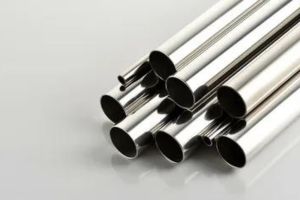
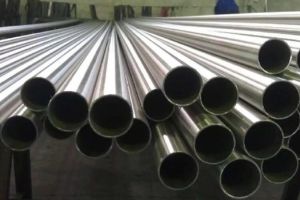
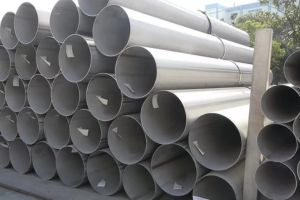
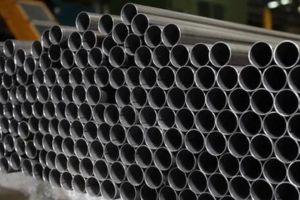
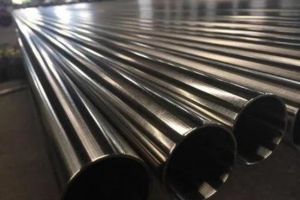
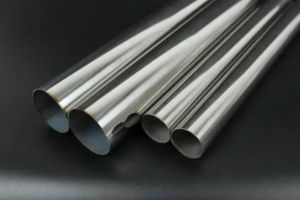
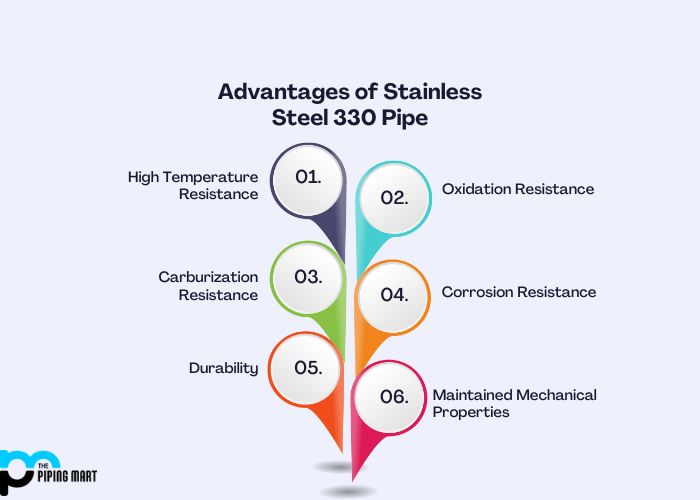
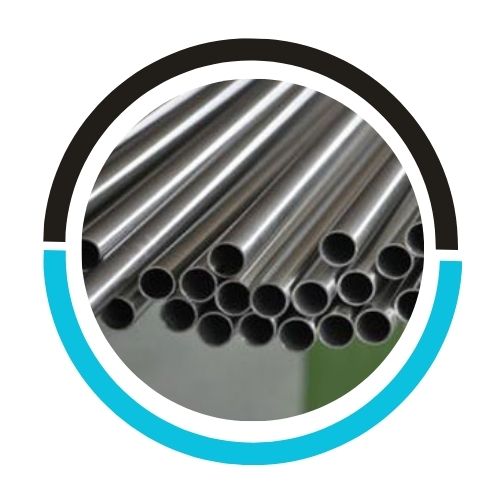
Stainless Steel 330 Pipe refers to piping manufactured from Stainless Steel 330, also known as UNS N08330. Stainless Steel 330 is a high-temperature austenitic stainless steel offering excellent strength along with resistance to oxidation and carburization at elevated temperatures. Piping made from Stainless Steel 330 is frequently employed in high-temperature applications like industrial furnaces, heat exchangers, and thermal processing equipment where corrosion resistance and high-temperature strength are essential. These pipes are recognized for their durability, resistance to scaling, and capacity to retain mechanical properties at high temperatures, which makes them well-suited for demanding environments.
| Specifications | : | ASTM B366 / ASME SB366 |
| Size | : | Seamless Butt Weld Fittings: 1/2″ – 10″, Welded Butt Weld Fittings: 1/2″ – 48″ |
| Standards | : | ASME/ANSI B16.9, ASME B16.28, MSS-SP-43 |
| Thickness | : | 5s, 10s, 40s, 80s, 10, 20, 40, STD, 60, 80, XS, 100, 120, 140, 160, XXS available with NACE MR 01-75 |
| Type | : | Seamless / Welded / Fabricated |
| Grade | C | Mn | Si | P | S | Cr | Cu | N | |
| 330 | min. | – | – | 0.75 | – | – | 17.0 | – | 34.0 |
| max. | 0.08 | 2.0 | 1.50 | 0.030 | – | 20.0 | – | 37.0 | |
| Grade | Tensile Strength (MPa) min | Yield Strength 0.2% Proof (MPa) min | Elongation (% in 50mm) min | Hardness | |
| Rockwell B (HR B) max | Brinell (HB) max | ||||
| 330 | – | – | – | – | – |
At Santossteel, we take pride in being the largest supplier and manufacturer in the Brazil, delivering advanced solutions for all your piping requirements. With modern production facilities strategically situated in the Brazil, we maintain an extensive stock of more than 25,000 tons of top-quality materials readily available on hand.
Reach out to us for a fast quote tailored to your needs.
We supply these Stainless Steel 330 Pipe conforming to DIN, ISO, JIS or ANSI Standard.
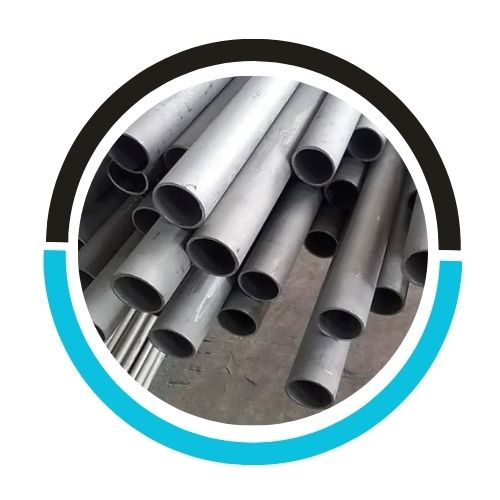
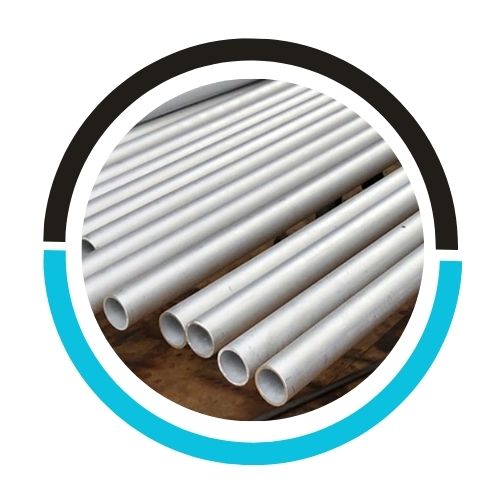
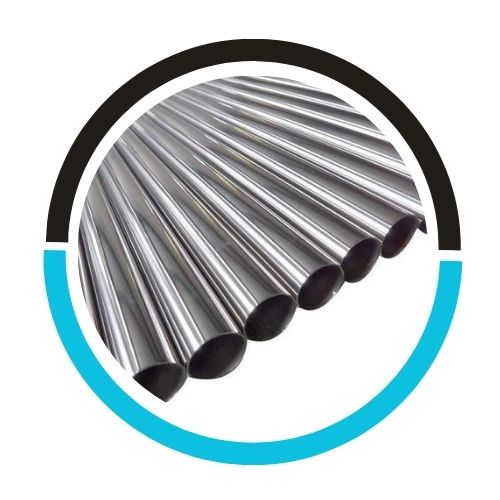
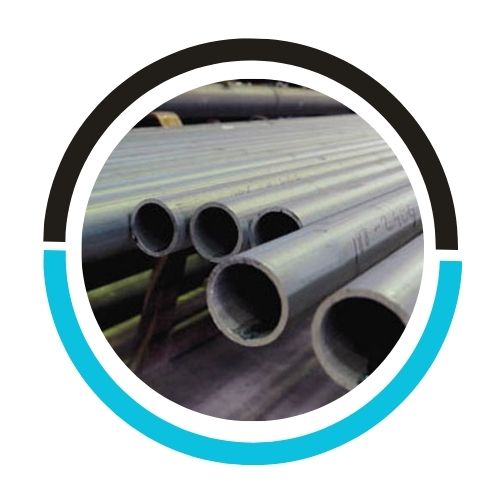
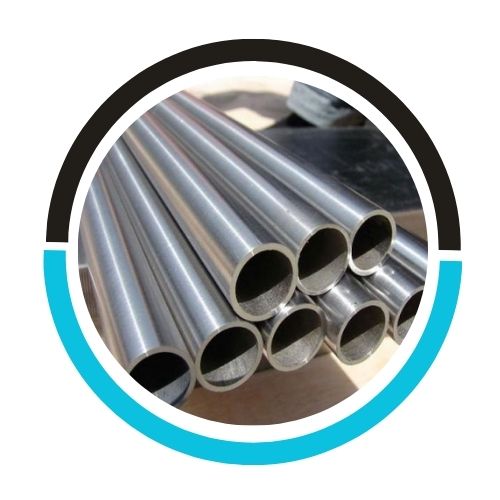
Stainless Steel 330 Pipe applications are as varied as the industries they cater to, led chiefly by the aerospace, railway, construction and automotive industries along with petrochemical, nuclear, medical, Oil & Gas, Chemical, Pharmaceutical, Food & Beverage, Nuclear, Thermal Power plants, Paper and Pulp, marine and mining, etc.
Yes, Stainless Steel 330 pipes can be recycled. Stainless steel is a material with excellent recyclability, and Stainless Steel 330 is no different. The recycling procedure entails gathering used Stainless Steel 330 pipes, melting them, and reshaping the material into new stainless steel products. Recycling Stainless Steel 330 pipes contributes to conserving natural resources, lowers energy usage, and reduces waste going to landfills. Furthermore, stainless steel retains its properties throughout recycling, making it endlessly recyclable without any loss of quality, thereby supporting sustainable and environmentally responsible practices.
Stainless Steel 330 pipes are suitable for structural applications in specific situations, especially in settings that demand strong resistance to high temperatures and corrosion. That said, their application in structural contexts might be more restricted than other stainless steel grades that are more precisely engineered for structural use, like 304 or 316 stainless steel. Stainless Steel 330 is chiefly prized for its outstanding performance at high temperatures and its ability to withstand oxidation and carburization, which makes it a stronger fit for uses like industrial furnaces, heat exchangers, and thermal processing equipment. Although it may add to structural integrity in certain instances, it is wise to consult a structural engineer to confirm that Stainless Steel 330 pipes satisfy the particular requirements and loading conditions of the planned structural application.
Stainless Steel 330 pipes typically are not drawn to magnets. In its annealed condition, stainless steel—including grade 330—is generally non-magnetic. That said, the steel may show slight magnetic behavior depending on the processing and heat treatment it has been subjected to. For Stainless Steel 330, which is engineered for high-temperature use, the non-magnetic characteristics are usually retained even following exposure to elevated temperatures. As a result, Stainless Steel 330 pipes are normally non-magnetic or display only minimal magnetic attraction, which makes them well-suited for applications where magnetic properties are undesirable.
Yes Stainless Steel 330 pipes can be joined through standard welding methods including TIG (Tungsten Inert Gas) welding, MIG (Metal Inert Gas) welding, and SMAW (Shielded Metal Arc Welding). That said, it’s important to apply suitable welding procedures and filler metals that are compatible with Stainless Steel 330 in order to achieve sound welds and preserve the material’s characteristics, particularly its resistance to high temperatures and corrosion. Preheating and post-weld heat treatment might be required to avoid distortion and keep the weld joint sound. In summary, when correct welding practices are followed, Stainless Steel 330 pipes can be successfully welded to satisfy particular application needs.
Email: sales@santossteel.com