Home > Copper Nickel > Copper Nickel Pipes
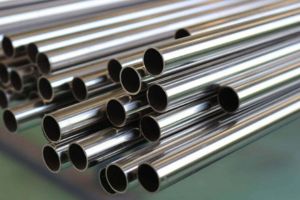
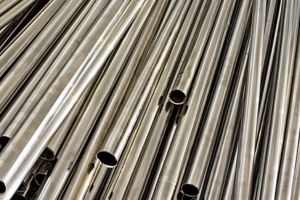
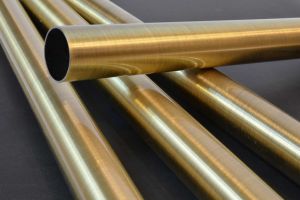
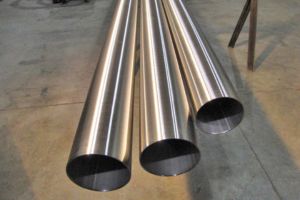
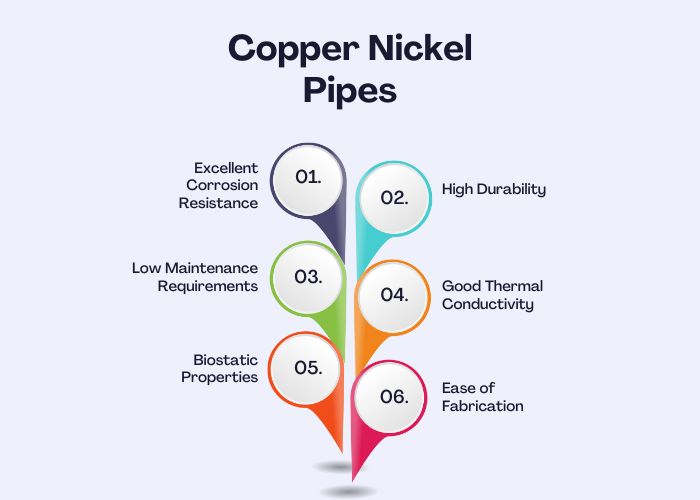
Copper Nickel Pipes are made from a blend of copper and nickel, usually with minor additions of other elements like iron and manganese. These pipes are well known for their outstanding corrosion resistance, especially in marine settings where they are widely applied thanks to their capacity to endure the corrosive impact of seawater. Copper nickel pipes provide high durability, minimal maintenance needs, and good thermal conductivity, which makes them appropriate for a broad spectrum of uses such as shipbuilding, offshore oil and gas platforms, desalination plants, and power generation facilities. Furthermore, copper nickel pipes are simple to fabricate, weld, and install, further boosting their versatility and usefulness across numerous industries.
| Dimensions | : | ASTM, ASME and API |
|---|---|---|
| Standard | : |
ASTM B466/ ASME SB466
|
| Size | : | 1/8″NB TO 30″NB IN |
| Specialized in | : | Large Diameter Size |
| Schedule | : | SCH20, SCH30, SCH40, STD, SCH80, XS, SCH60, SCH80, SCH120, SCH140, SCH160, XXS |
| Form | : | Round, Square, Rectangular, Hydraulic Etc |
| Type | : | Seamless / Fabricated |
| Length | : | Single Random, Double Random & Cut Length. |
| End | : | Plain End, Beveled End, Threaded |
| Grade | Cu | Pb | Mn | Fe | Zn | Ni |
| Cu-Ni | 65.0 min | .05 max | 1.0 max | 0.4-1.0 | 1 max | 29 – 33 |
| Density | Melting Point | Tensile Strength | Yield Strength (0.2%Offset) | Elongation |
| 0.323 lb/in3 at 68 F | 2260 F | 50000 psi | 20000 psi | 30 % |
At Santossteel, we take pride in being the largest supplier and manufacturer in the Brazil, delivering advanced solutions for every one of your piping requirements. With cutting-edge production facilities strategically positioned in the Brazil, we maintain a large inventory of more than 25,000 tons of top-quality materials kept ready in stock.
Reach out to us for a fast quote tailored to your requirement.
Nós fornecemos estes tubos de cobre e níquel de acordo com as normas DIN, ISO, JIS ou ANSI.
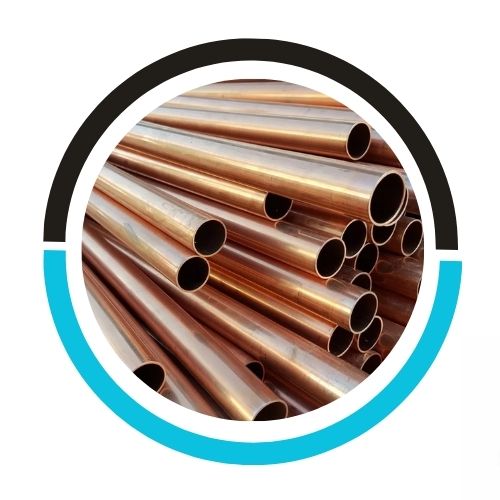
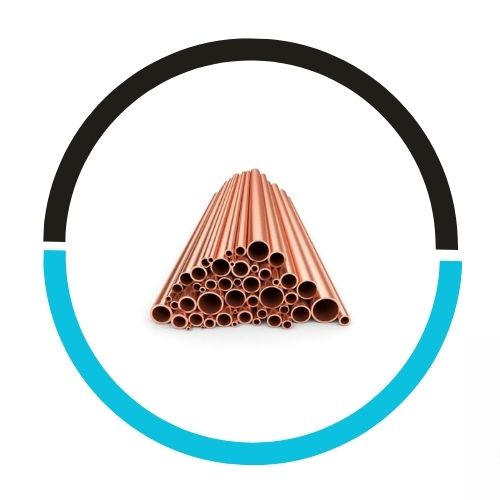
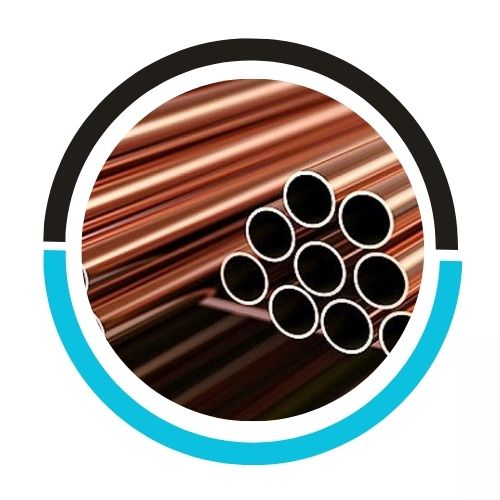
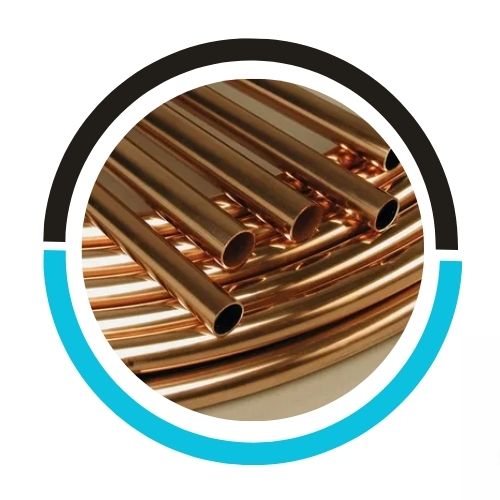
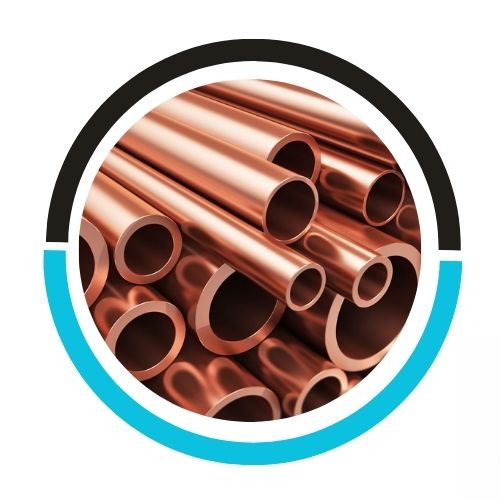
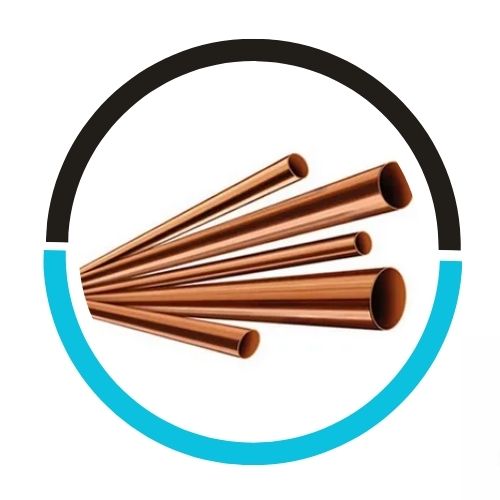
Copper Nickel Pipes serve applications as varied as the industries that use them, led mainly by the aerospace, railway, construction and automotive industries along with petrochemical, nuclear, medical, Oil & Gas, Chemical, Pharmaceutical, Food & Beverage, Nuclear, Thermal Power plants, Paper and Pulp, marine and mining, etc.
Yes, copper nickel pipes are regarded as economical thanks to their extended service life, low maintenance needs, and their ability to withstand corrosion and biofouling. Although the upfront purchase price of copper nickel pipes might be higher than that of other materials, their durability and dependability lead to reduced lifecycle costs in the long run. Furthermore, the outstanding corrosion resistance of copper nickel pipes cuts down on the need for regular replacements, downtime, and maintenance costs, making them an economical option for a range of applications, especially in marine settings and industries where corrosion poses a major concern.
Yes, there are various standards and specifications governing copper nickel pipes. The most frequently cited standards include ASTM B466 for seamless copper nickel pipes and ASTM B467 for welded copper nickel pipes. These standards define the chemical composition, mechanical properties, dimensions, and tolerances of copper nickel pipes. In addition, other standards like ASTM B111/B111M address copper and copper alloy seamless condenser tubes and ferrule stock. Adhering to these standards guarantees that copper nickel pipes satisfy quality, performance, and safety requirements across a range of applications, including marine, offshore, chemical processing, and power generation.
Copper nickel pipes are available in multiple configurations designed to fit a range of industrial and marine uses. Typical options include straight pipes, employed for direct piping runs, bends for altering direction, elbows for sharp turns, tees for splitting into several directions, reducers for shifting between pipe diameters, and flanges for joining pipes or valves. On top of that, there are specialized options such as U-bends for particular piping arrangements and manifolds for channeling fluid or gas to numerous outlets. These configurations deliver flexibility and dependability when transporting fluids or gases in corrosive settings, which makes copper nickel pipes a favored option in sectors like marine, offshore, and chemical processing.
Copper nickel pipes are less prone to galvanic corrosion than other metal pairings because of their comparable electrochemical characteristics. The copper present in copper nickel alloys helps reduce galvanic corrosion by creating a protective oxide layer on the surface, which lowers the likelihood of electrochemical reactions with other metals. Furthermore, adding nickel enhances corrosion resistance in marine settings. Nevertheless, galvanic corrosion may still take place if copper nickel pipes make contact with dissimilar metals under certain circumstances, so applying proper insulation or using compatible materials at contact points is advised to reduce this risk.
Email: sales@santossteel.com