Home > Copper Nickel > Copper Nickel Coils
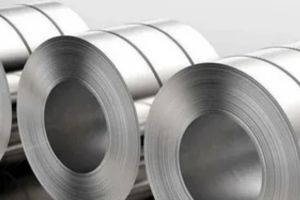
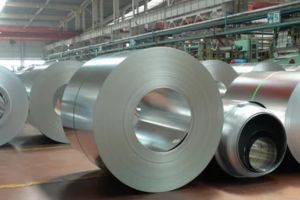
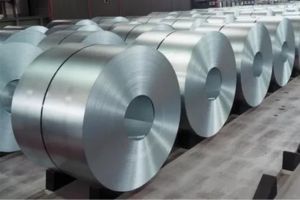
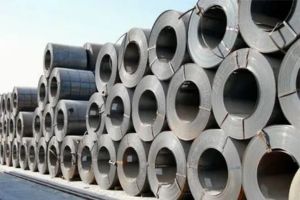
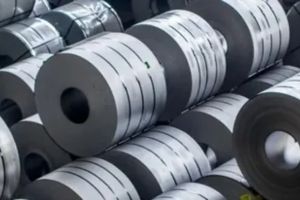
Copper Nickel Coils are indispensable parts recognized for their outstanding resistance to corrosion and thermal conductivity. Made mainly of copper with differing amounts of nickel, usually between 5% and 30%, these coils find broad use in marine engineering, offshore oil and gas, and HVAC systems. Because they withstand seawater corrosion and biofouling, they are perfectly suited for uses like heat exchangers, condensers, and piping systems in marine settings. On top of that, their strong thermal conductivity makes them a good fit for heat transfer purposes in HVAC systems, refrigeration units, and power generation. Copper nickel coils provide a dependable and economical option for industries that need durable, corrosion-resistant, and heat-conductive materials in coil form.
| Grades | Cu-Ni 90/10, Cu-Ni 70/30 |
| Thickness | 0.1mmThk To 3 mm Thk |
| Width | 3.2mm To 1500mm |
| Length | AS PER CUSTOMER’S REQUIREMENT |
| Type of Material | Cupro Nickel SOFT, DEEP DRAW, EXTRA DEEP DRAW, QUARTER HARD, HALF HARD, FULL HARD. |
| Form | Coil / Strip |
| Test Certificate | Yes. |
| Finish | NO.1, 2B, 2D, 2H, 2R, No.4, HAIRLINE, SCOTCH BRITE, SATIN FINISH, NO.8, BA. |
| Make | BAHRU, POSCO KOREA, POSCO THAINOX, COLUMBUS, ACERINOX, APERAM, TISCO, NISSHIN, NIPPON AND MANY MORE MILLS. |
| Property | Units | 90-10 | 70-30 |
| Density | kg/dm3 | 8.90 | 8.95 |
| Melting point | °C | 1100-1145 | 1170-1240 |
| Specific heat | J/KGK | 377 | 377 |
| Thermal conductivity | W/mK | 50 | 29 |
| Linear expansion coefficient 10-300°C | 10-6/K | 17 | 16 |
| Electrical resistivity | Micro-ohm/cm | 19 | 34 |
| Modulus of elasticity | GPa | 135 | 152 |
| Modulus of rigidity | GPa | 50 | 56 |
| Grade | Cu | Pb | Fe | Zn | Mn | Ni+Co |
| C70400 | Balance | ≤ 0.05 | 1.3-1.7 | ≤ 1.0 | 0.3-0.8 | 4.8-6.2 |
| C70600 | Balance | ≤ 0.05 | 1.0-1.8 | ≤ 1.0 | ≤ 1.0 | 9.0-11.0 |
| C71000 | Balance | ≤ 0.05 | 0.5-1.0 | ≤ 1.0 | ≤ 1.0 | 19.0-23.0 |
| C71500 | Balance | ≤ 0.05 | 0.4-1.0 | ≤ 1.0 | ≤ 1.0 | 29.0-33.0 |
At Santossteel, we take pride in being the largest supplier and manufacturer in the Brazil, delivering advanced solutions for every one of your piping requirements. With cutting-edge production facilities strategically situated in the Brazil, we maintain an extensive inventory of more than 25,000 tons of top-quality materials kept ready in stock.
Reach out to us for a fast quote tailored to your requirement.
We supply these Copper Nickel Coils in accordance with DIN, ISO, JIS or ANSI Standard.
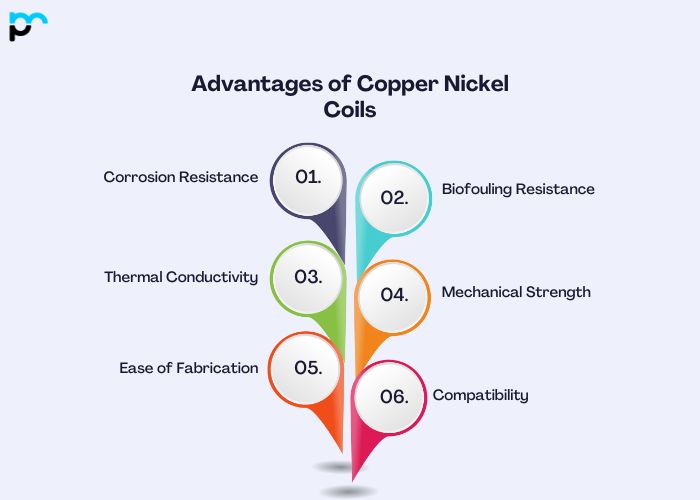
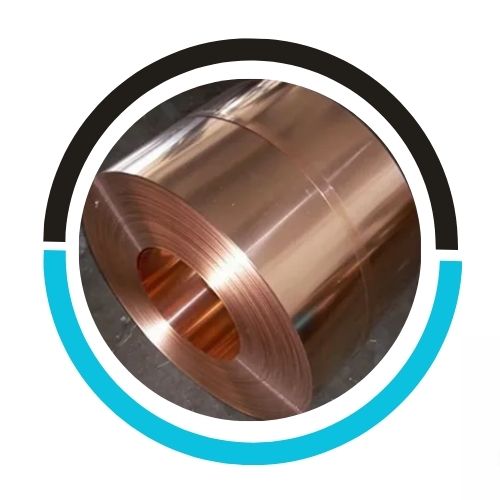
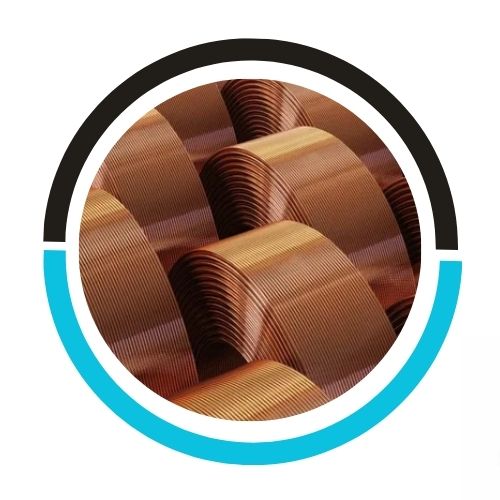
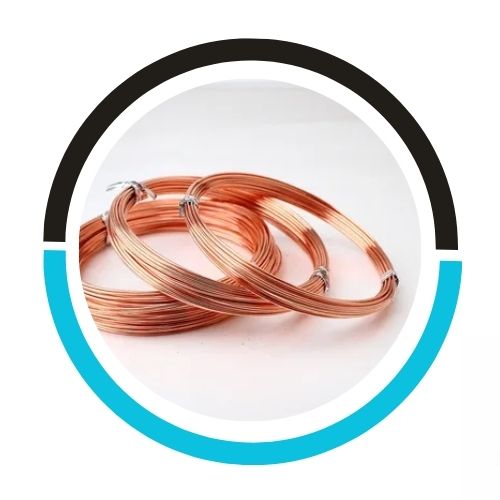
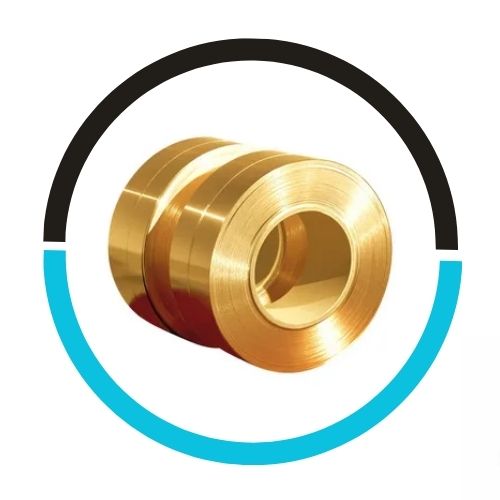
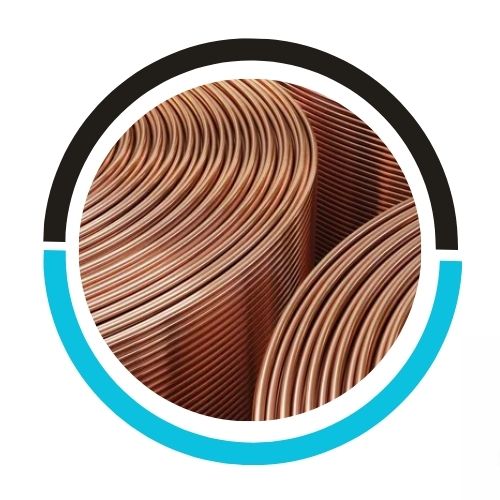
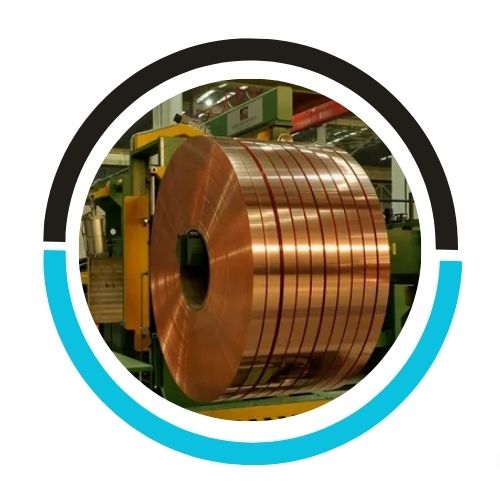
Copper Nickel Coils serve applications as varied as the industries that rely on them, driven mainly by the aerospace, railway, construction and automotive industries along with petrochemical, nuclear, medical, Oil & Gas, Chemical, Pharmaceutical, Food & Beverage, Nuclear, Thermal Power plants, Paper and Pulp, marine and mining, etc.
Yes, Copper Nickel Coils are weldable through a range of welding methods including gas tungsten arc welding (GTAW), shielded metal arc welding (SMAW), and resistance welding. Nevertheless, owing to their distinctive characteristics and elevated thermal conductivity, particular care and methods are frequently needed to obtain high-quality welds. Warming the material beforehand, choosing suitable welding parameters, and employing filler materials that work well with copper nickel alloys are critical measures to guarantee effective welding. Furthermore, heat treatment after welding might be required to alleviate residual stresses and improve the mechanical characteristics of the welded joint. In summary, with the right skill and methods, copper nickel coils can be welded efficiently to satisfy the demands of numerous industrial applications.
Yes, Copper nickel coils can be recycled. Copper and nickel are valuable metals frequently utilized across many industries, including heating and cooling systems where coils are common. Recycling these coils supports the conservation of natural resources, lowers energy usage, and reduces environmental impact. The procedure entails melting the coils to recover the metals for reuse in new products, making it a sustainable and economically practical approach.
Copper nickel coils are celebrated for their outstanding resistance to corrosion, especially in marine settings and upon contact with seawater. The nickel content within the alloy boosts its ability to withstand corrosion, rendering it well-suited for uses where corrosion poses a risk. Nevertheless, as with any material, copper nickel is capable of corroding under severe conditions or in exceptionally harsh environments. Appropriate upkeep and preventive steps can assist in reducing corrosion and prolonging the service life of copper nickel coils.
Email: sales@santossteel.com