Home > Copper Nickel > Copper Nickel Tube
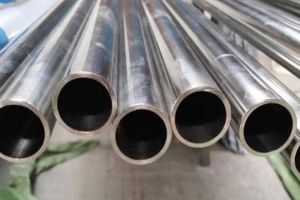
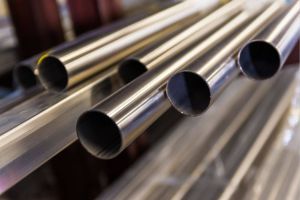
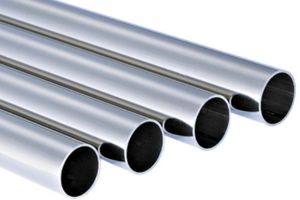
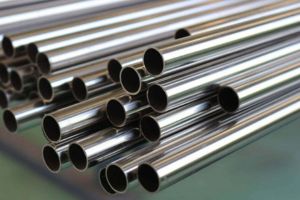
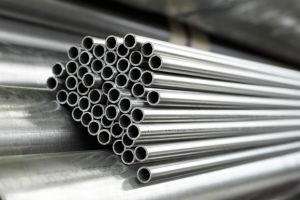
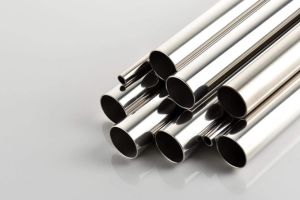
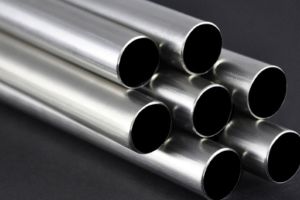
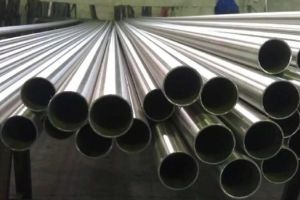
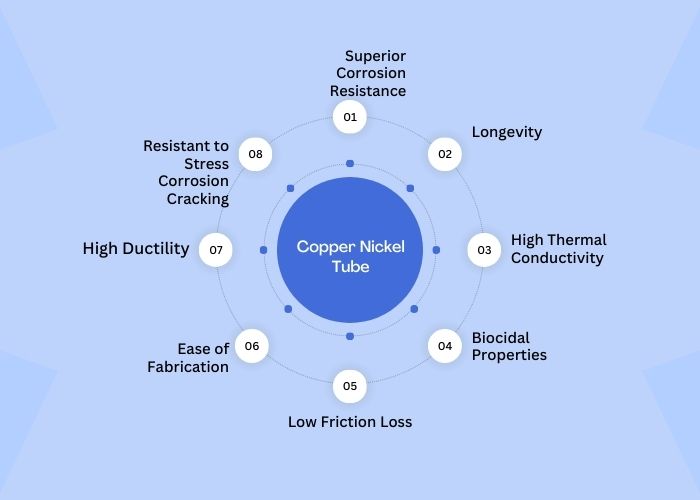
Copper nickel tubes are highly praised for their outstanding corrosion resistance, which makes them a favored option for a range of industrial uses. Made from a copper alloy containing nickel and other trace elements, these tubes demonstrate remarkable resistance to seawater, brine, and other severe environments, rendering them perfect for marine and offshore uses. Thanks to their high thermal conductivity and excellent fabrication qualities, copper nickel tubes are also employed in heat exchangers, condensers, and piping systems where durability and reliability are essential. Their adaptability, along with outstanding performance in demanding conditions, establishes copper nickel tubes as a reliable solution for critical uses throughout numerous industries.
| Dimensions | : | ASTM, ASME and API |
|---|---|---|
| Standard | : |
ASTM B466/ ASME SB466
|
| Size | : | 1/8″NB TO 30″NB IN |
| Specialized in | : | Large Diameter Size |
| Schedule | : | SCH20, SCH30, SCH40, STD, SCH80, XS, SCH60, SCH80, SCH120, SCH140, SCH160, XXS |
| Form | : | Round, Square, Rectangular, Hydraulic Etc |
| Type | : | Seamless / Fabricated |
| Length | : | Single Random, Double Random & Cut Length. |
| End | : | Plain End, Beveled End, Threaded |
| Grade | Cu | Pb | Mn | Fe | Zn | Ni |
| 70/30 Cu-Ni | 65.0 min | .05 max | 1.0 max | 0.4-1.0 | 1 max | 29 – 33 |
| Density | Melting Point | Tensile Strength | Yield Strength (0.2%Offset) | Elongation |
| 0.323 lb/in3 at 68 F | 2260 F | 50000 psi | 20000 psi | 30 % |
At Santossteel, we take pride in being the largest supplier and manufacturer in the Brazil, delivering advanced solutions for every one of your piping requirements. With cutting-edge production facilities strategically positioned in the Brazil, we maintain an extensive inventory of more than 25,000 tons of top-quality materials kept ready in stock.
Reach out to us to receive a fast quote for your requirement.
Our supply of these Copper Nickel Tubes complies with DIN, ISO, JIS or ANSI Standard.
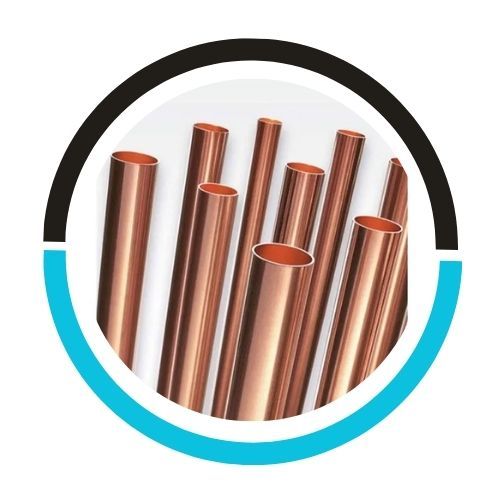
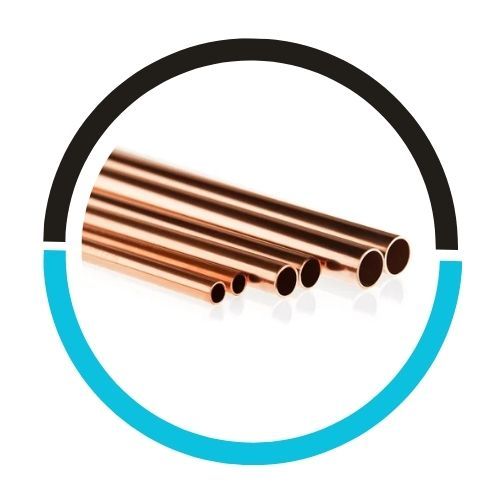
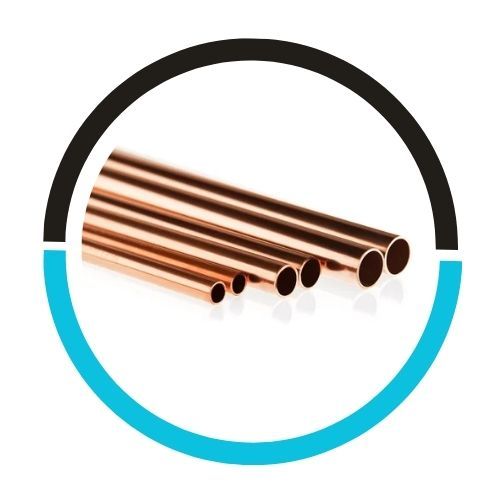
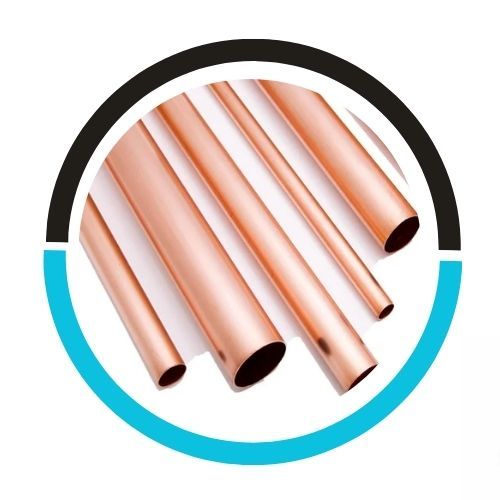
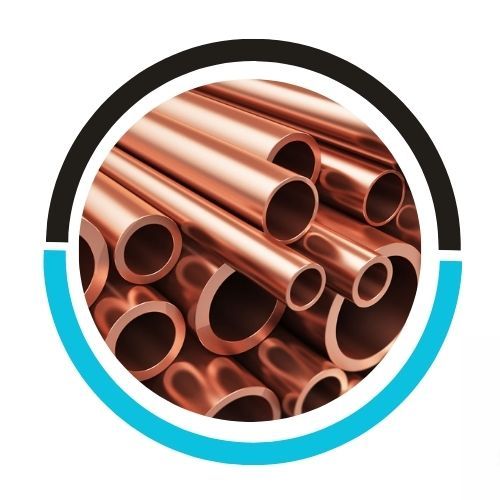
Copper Nickel Tube uses are as varied as the sectors they support, led mainly by the aerospace, railway, construction and automotive industries alongside petrochemical, nuclear, medical, Oil & Gas, Chemical, Pharmaceutical, Food & Beverage, Nuclear, Thermal Power plants, Paper and Pulp, marine and mining, etc.
Yes Copper Nickel Tubes are regarded as economical because of their extended lifespan, ability to resist corrosion, and minimal upkeep demands. Although their upfront price may exceed that of certain alternative materials, their toughness and corrosion resistance lessen the frequency of replacements and servicing, which yields long-term savings. Furthermore, their strong thermal conductivity can produce energy savings in heat transfer uses. On the whole, the advantages of copper nickel tubes surpass their upfront price, rendering them an economical option for a range of industries and applications.
Yes, there are established standards and specifications governing copper nickel tubes. Among the most widely used standards are ASTM B111/B111M for seamless copper nickel tubes and ASTM B466/B466M for welded copper nickel tubes. These specifications detail the requirements for chemical composition, mechanical properties, dimensions, and tolerances of copper nickel tubes across a range of applications, guaranteeing quality and uniformity in both manufacturing and performance. Furthermore, additional international standards like EN 12451 and DIN 86019 may be relevant depending on the region and particular industry needs.
Copper nickel tubes come in various configuration types designed to meet the needs of different applications. These configurations comprise straight lengths, coils, U-bends, and coils featuring integral fins. Straight lengths are typically employed for general piping, whereas coils are favored for compact installations or situations demanding flexibility. U-bends serve in heat exchangers and condensers, delivering efficient heat transfer. Coils with integral fins expand the surface area to enhance heat transfer and are frequently applied in air conditioning and refrigeration systems. Every configuration provides distinct benefits and is chosen according to particular application needs.
Copper nickel tubes are less prone to galvanic corrosion than other metals such as steel when combined with dissimilar metals in seawater settings. The natural resistance of copper nickel alloys to galvanic corrosion, along with their outstanding corrosion resistance in marine conditions, makes them a favored option for applications where galvanic corrosion could be an issue. Nevertheless, it’s crucial to account for the particular application conditions and possible interactions with other metals to effectively reduce any risk of galvanic corrosion.
Email: sales@santossteel.com