Home > Stainless Steel Flanges >304H Stainless Steel Flanges
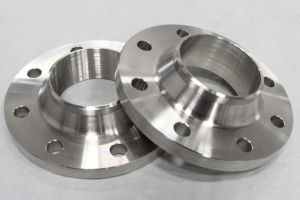
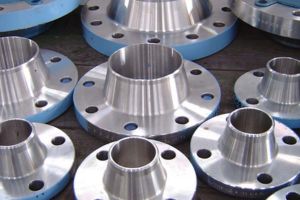
Stainless Steel 304H flanges stand as indispensable elements within diverse piping systems, renowned for their outstanding mechanical capabilities and corrosion durability. tailor-made from Stainless Steel 304H, a grade prized for its excellent heat tolerance and weldability, these flanges deliver superior performance in demanding conditions. Boasting a makeup rich in chromium and nickel, Stainless Steel 304H demonstrates exceptional corrosion resistance, rendering it a preferred selection for applications requiring endurance against corrosive substances. Additionally, its alloying elements enhance improved mechanical qualities, such as sturdy strength, toughness, and wear resistance. This combination of characteristics establishes Stainless Steel 304H flanges as vital resources across industries, guaranteeing reliable operation and extended service life even in rigorous working conditions.
| Standard | ASTM A182 / ASME SA182 |
| Dimensions | ANSI/ASME B16.5, B 16.47 A & B, B16.48, BS4504, BS 10, EN-1092, DIN |
| Standard | ANSI Flanges, ASME Flanges, BS Flanges, DIN Flanges, EN Flanges |
| Size | 1/2″ (15 NB) to 48″ (1200NB) |
| Class/Pressure | 150#, 300#, 600#, 900#, 1500#, 2500#, PN6, PN10, PN16, PN25, PN40, PN64 |
| Flange Face Type | Flate Face (FF), Raised Face (RF), Ring Type Joint (RTJ) |
| Grade | C | Mn | Si | P | S | Cr | Mo | Ni | N |
| 304H | 0.10 | 2.0 | 0.75 | 0.045 | 0.03 | 18 – 20 | – | 8 – 10.5 | – |
Grade
| Density | Tensile Strength (MPa) min | Yield Strength 0.2% Proof (MPa) min | Elongation (% in 50mm) min | Hardness | |
| Rockwell B (HR B) max | Brinell (HB) max | |||||
| 304H | 8.0 g/cm3 | 515 | 205 | 35 | 92 | 201 |
At Santossteel, we take pride in being the largest supplier and manufacturer in the Brazil, delivering advanced solutions for all your piping requirements. With cutting-edge production facilities strategically situated in the Brazil, we maintain an extensive inventory of more than 25,000 tons of top-quality materials kept ready in stock.
Reach out to us for a fast quote tailored to your requirement.
Our These Stainless Steel 304H Flanges are supplied according to DIN, ISO, JIS or ANSI Standard.
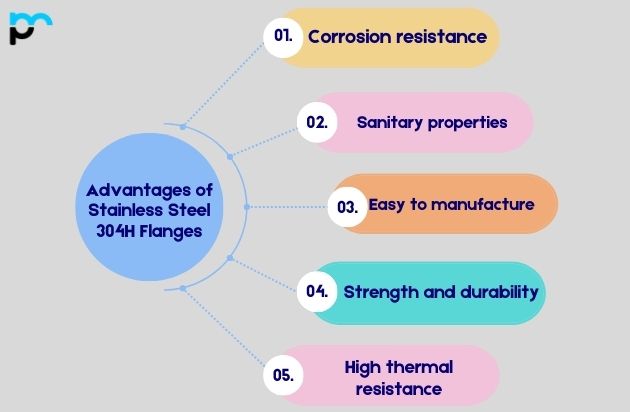
Corrosion resistance: Stainless steel 304H is recognized for its outstanding resistance to corrosion, which makes it appropriate for numerous applications, including those involving high water or chemical exposure. This resistance to corrosion supports the flange’s integrity and longevity, even under extreme conditions.
Sanitary properties: Stainless steel 304H is nonporous and simple to clean, which makes it appropriate for hygiene-sensitive uses, such as food and beverage production, pharmaceuticals and healthcare.
Easy to manufacture: Stainless steel 304H is simple to shape and weld, which makes it straightforward to produce flanges in a range of shapes and sizes to meet particular application needs. This flexibility in fabrication enables customization and ensures the flanges can seat securely within systems.
Strength and durability: Stainless steel 304H demonstrates superior tensile strength and stiffness, delivering excellent structural integrity and strength. This strength ensures the flanges can endure high and mechanical stresses without deformation or failure, adding to the reliability and safety of the whole system.
High thermal resistance: The “H” in 304H denotes elevated carbon, which boosts its strength and high thermal resistance relative to standard 304 stainless steel This makes 304H flanges appropriate for high-temperature uses, such as heat exchangers, boilers, and other industrial production processes
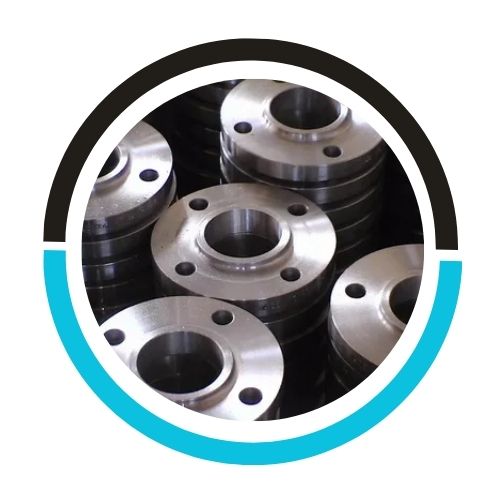
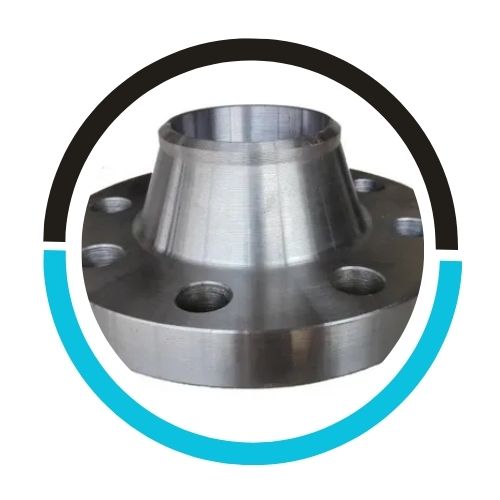
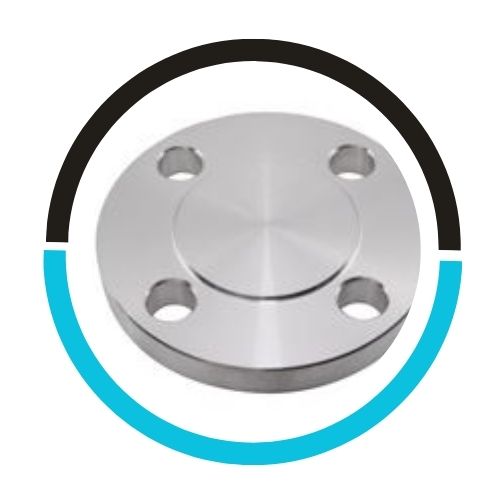
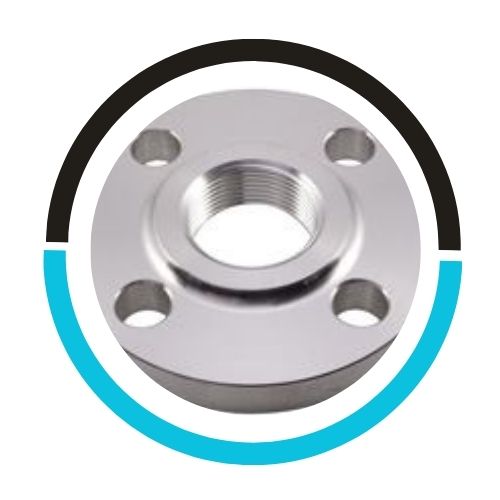
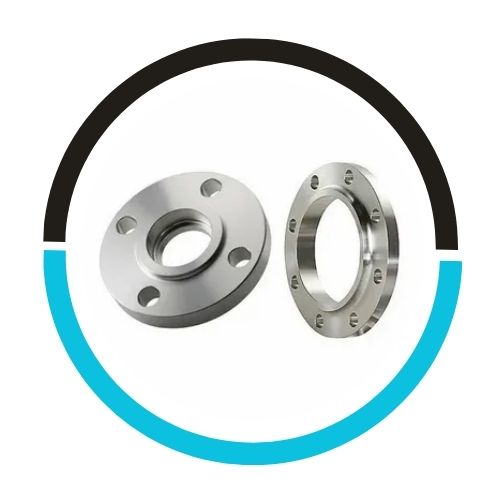
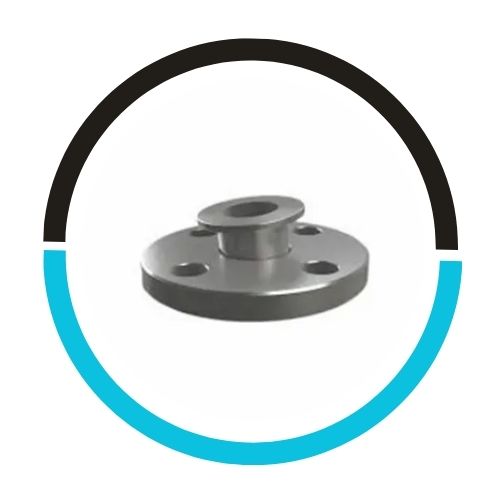
Stainless Steel 304H Flanges offer outstanding mechanical properties and withstand wear corrosion, and high temperatures, making them common across many industries. These flanges see broad use in the oil and gas, petrochemical, power generation, and aerospace industries. They serve a key role in connecting equipment, valves, and pipe systems. Thanks to their remarkable strength, toughness, and resistance to wear, they are ideal for applications subjected to harsh operating conditions, including high temperatures, elevated pressures, and corrosive surroundings.
Petrochemical Industry: Stainless steel 304H flanges join pipes, valves and other equipment in petrochemical facilities. Their resistance to corrosion and stability at high temperatures make them well suited for dealing with various chemicals and operating conditions.
Chemical and biotechnology: Stainless steel 304H flanges serve in sanitary pipe systems within the pharmaceutical and biotech sectors. The smooth, corrosion-resistant materials satisfy rigorous hygiene standards and prevent contamination time which are being done.
Power Generation: Power generation, covering fossil fuel, nuclear, and renewable energy, employs Stainless Steel 304H flanges in piping systems for hot water, water and other fluids. Their high temperature and resistance to energy requirements in energy production make them useful in applications.
Chemical applications: Chemical facilities rely on stainless steel 304H flanges to manage various acids, alkalis and corrosive chemicals. They deliver dependable connections that withstand degradation even in aggressive chemicals.
Oil and Gas Industry: Oil and natural gas refineries apply stainless steel 304H flanges in pipeline systems to move crude oil, refined products, and natural gas Hydrocarbon acids found in these areas. They can endure the degradation of the original materials.
Operating conditions: Take into account the operating conditions, such as temperature, pressure, and any corrosive substances present. Stainless steel 304H works well for high-temperature uses. It provides strong corrosion resistance, but if the environment is unusually severe, you might have to opt for a superior grade of stainless steel or an entirely different material.
Standards and Specifications: Make sure that stainless steel 304H flanges meet applicable industry standards and specifications, including ASTM, ASME, ANSI, and DIN standards. Meeting these standards guarantees the flange’s quality, performance and flexibility.
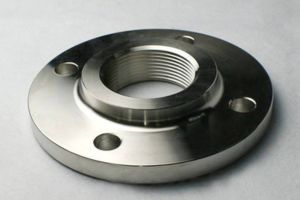
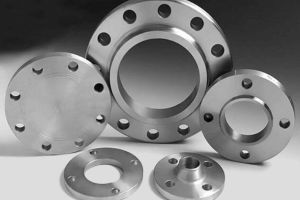
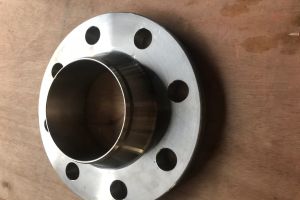
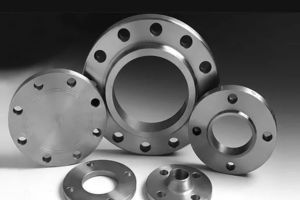
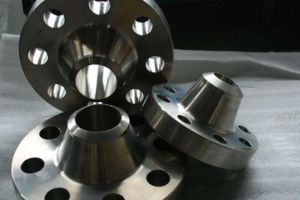
Flange Type: Pick the right type according to the application and the layout of the piping system. Common uses include weld necks, slip-ons, threaded socket welds, and blind flanges. Every method comes with particular benefits and drawbacks, so select the one that best fits your design and maintenance requirements.
Size and Dimensions: Figure out the flanges’ needed size, stress level, and thickness according to the piping system being installed. Confirm compatibility with current equipment and piping parts to deliver sufficient and portable connections so
Yes, Stainless Steel 304H flanges can be welded thanks to their low carbon content along with the chromium and nickel they contain, which enhance weldability. That said, preheating and post-weld heat treatment might be required to avoid sensitization and preserve corrosion resistance within the heat-affected zone.
Yes, Stainless Steel 304H flanges are highly recyclable. They can be melted and repurposed to create new stainless steel products without weakening their mechanical properties or resistance to corrosion. Recycling stainless steel supports resource conservation, cuts down on waste, and lessens environmental impact.
Stainless Steel 304H flanges are suitable for underground applications when appropriate precautions are taken. They provide solid corrosion resistance in soil settings, though considerations such as soil makeup, moisture content, and possible chloride exposure ought to be taken into account. Applying protective coatings or cathodic protection can improve their durability when installed underground.
Stainless Steel 304H flanges are typically unsuitable for cryogenic applications because of their lowered toughness and the risk of embrittlement at low temperatures. For cryogenic service, specialized stainless steels containing more nickel, like 304LN or 304L, are the preferred choice to guarantee sufficient ductility and toughness.
Email: sales@santossteel.com