Home > Stainless Steel Flanges > Stainless Steel 303 Flanges
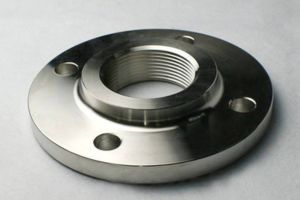
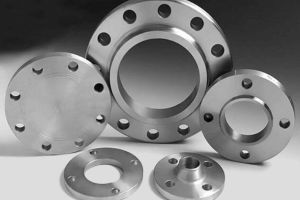
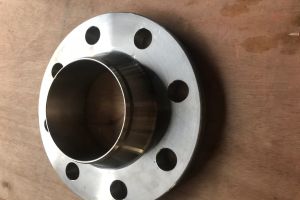
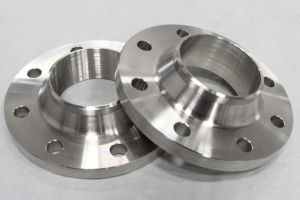
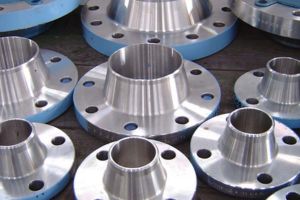
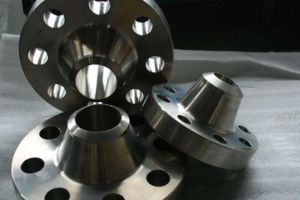
Stainless Steel 303 flanges are essential elements of piping systems, valued for their outstanding mechanical qualities and resistance to corrosion. These flanges are made to order from Stainless Steel 303, a grade celebrated for its excellent machinability and formability. Thanks to its composition abundant in chromium and nickel, Stainless Steel 303 boasts superior corrosion resistance, making it well-suited for applications that require durability against demanding environments. Moreover, its alloying elements promote improved mechanical properties, such as impressive strength, toughness, and wear resistance. This combination of characteristics makes Stainless Steel 303 flanges essential across a range of industries, guaranteeing dependable performance and durability under tough operating conditions.
|
Material |
Stainless steel 303 Flanges |
|
Standard |
ASME/ANSI B16.5 ASME B16.47(A) ASME B16.47(B) ASME B16.48 |
|
Type |
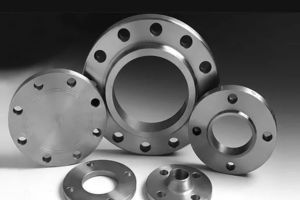
SO WN SW TH LJ BL |
|
Size |
1/2″-24″ 26″-72″ |
|
Pressure |
75Lb-2500Lb |
|
Surface |
Anti-rust Oil, Transparent/Yellow/Black Anti-rust Paint, Zinc ,Flame Plating |
|
Facing |
FF RF MFM TG RJ |
|
Producing process |
Billet-cutting-forging-heating-lathe-drilling-inspection-marking-packing-export-din flange |
|
Package |
Plywood cases or pallet ,or as customers’ requirement |
|
Applications |
Petroleum, chemical, power, gas, metallurgy, shipbuilding, construction, etc |
|
Inspection |
ANSI Flange accept Factory in-house or third party inspection |
|
Process |
Forged and casting |
|
Payment item |
T/T |
|
Grade |
C |
Mn |
Si |
P |
S |
Cr |
Mo |
Ni |
N |
|
Stainless Steel 303 |
0.15 max |
2 max |
1 max |
0.20 max |
0.15 min |
17.0-19.0 |
– |
8 – 10 |
|
STANDARD |
WERKSTOFF NR. |
UNS |
JIS |
BS |
GOST |
AFNOR |
EN |
|
Stainless Steel 303 |
1.4305 |
S30300 |
SUS 303 |
At Santossteel, we take pride in being the largest supplier and manufacturer in the Brazil, delivering advanced solutions for all your piping requirements. With cutting-edge production facilities strategically situated in the Brazil, we hold an extensive inventory of more than 25,000 tons of top-quality materials kept ready in stock.
Reach out to us for a fast quote tailored to your requirement.
We supply these Stainless Steel 303 Flanges conforming to DIN, ISO, JIS or ANSI Standard.
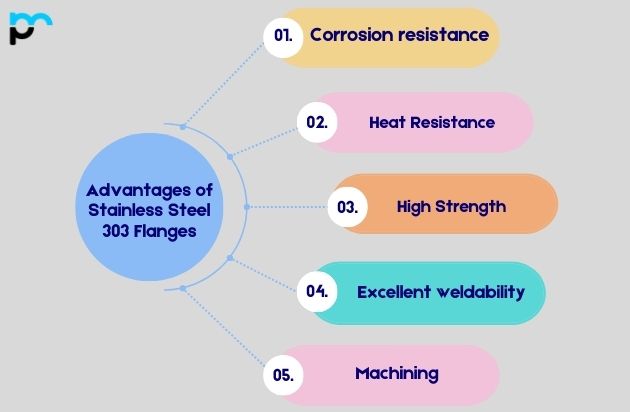
Corrosion resistance: Stainless steel 303 includes chromium and nickel to deliver strong corrosion resistance, which makes it well suited for use across many wet, chemical and salt environments
Heat Resistance: Stainless steel 303 shows excellent resistance to impact and oxidation at high temperatures, making it a good choice for applications where flanges may become hot
High Strength: While it is not as high as some other stainless steels like 304 or 316, Stainless Steel 303 still offers sufficient strength for many applications, where flanges are required to endure moderate to heavy stresses or loads
Excellent weldability: Stainless steel 303 offers excellent weldability, which makes forming flanges through the welding process easier without a significant risk of cracking or distortion
Machining: One of the primary benefits of 303 stainless steel is its outstanding machinability. This grade is built for easy machining, making it cost-effective and efficient for producing flanges with intricate designs or tight tolerances.
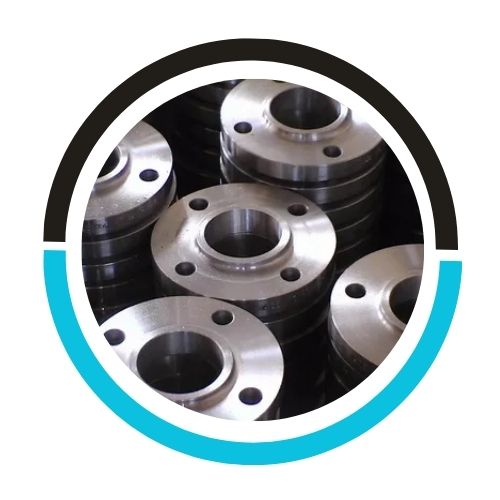
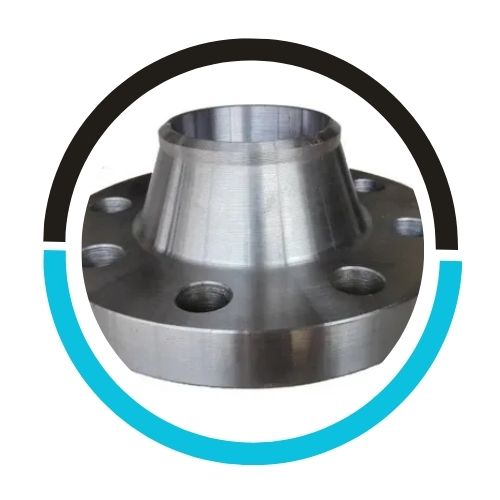
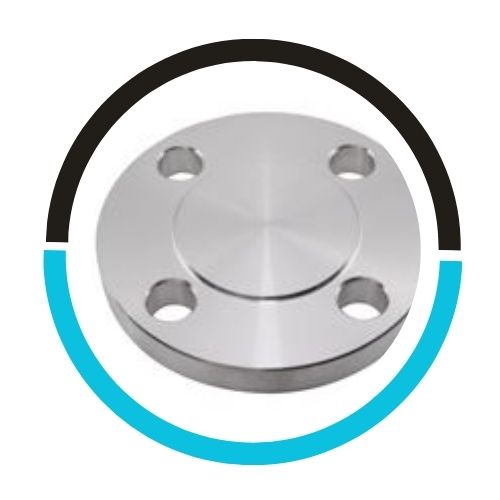
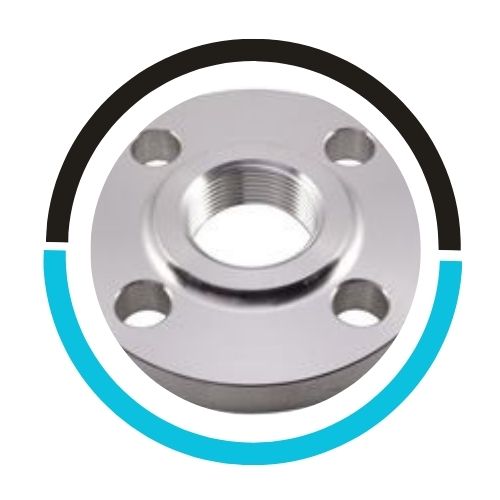
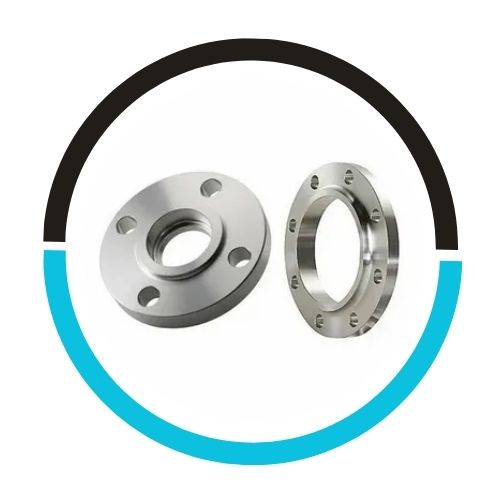
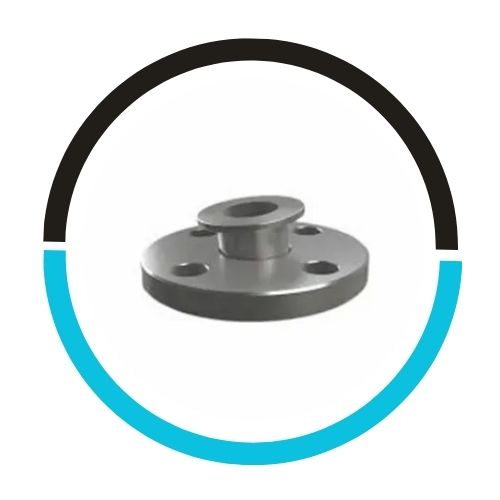
Stainless Steel 303 Flanges offer outstanding mechanical properties and withstand wear corrosion, and elevated temperatures, making them common across many industries. You will find these flanges applied extensively in the oil and gas, petrochemical, power generation, and aerospace sectors. They serve a key role in connecting equipment, valves, and pipe systems. Thanks to their remarkable strength, toughness, and resistance to wear, they suit applications subjected to harsh operating conditions like high temperatures, high pressures, and corrosive surroundings.
Piping systems: Stainless steel 303 flanges join pipes, valves, pumps, and additional components within piping systems. They deliver a secure, leak-proof connection, particularly in high-pressure or corrosive settings.
Aerospace: Stainless steel 303 flanges are employed in aerospace engineering, especially in applications that demand high strength, corrosion resistance, and lightweight materials. They are found in aircraft fuel systems, hydraulic systems, and building materials.
Oil and Gas: Within the oil and gas industry, stainless steel 303 flanges serve in pipelines, offshore platforms, and refineries in hot environments and high temperatures. Their durability and corrosion resistance make them well-suited for such demanding applications.
Food and Beverage Industry: Stainless steel is widely used in the food and beverage industry thanks to its capacity to resist corrosion and uphold hygiene standards. Flanges crafted from this material are utilized in processing equipment, pipes and tanks.
Chemical Applications: Stainless steel 303 flanges are favored in applications such as chemical processing where corrosion resistance is necessary. They can endure exposure to aggressive chemicals, such as acids and alkalis, without degradation or degradation.
Rationale for Stainless Steel 303: Stainless steel 303 is a free-machining version of the standard 18-8 grade 304, with sulfur or selenium added to enhance its mechanical properties. It offers outstanding corrosion resistance and is simple to assemble and weld.
Consider machinability: A key benefit of stainless steel 303 is the better machinability that comes from adding sulfur or selenium. If your use case calls for intensive machining, the 303 flange could be a good fit.
Check mechanical properties: Stainless steel 303 works well for a wide range of applications. That said, if your application demands greater complexity, you might have to select a different grade offering enhanced mechanical properties.
Check for corrosion resistance: Stainless steel 303 delivers strong corrosion resistance in tough conditions. Even so, if your project deals with aggressive chemicals or severe corrosion, you may want to look at other stainless steels with high corrosion resistance, such as 304 or 316
Know Application Requirements: Determine the exact application you need the flange for. Take into account factors like temperature, pressure, chemicals, and environment. Different applications may call for different grade specifications for stainless steel flanges.
Yes, Stainless steel 303 flanges can be welded. Nevertheless, welding them is not advised because of the sulfur or selenium content, which may cause hot cracking while welding. For welding applications, it is recommended to perform post-weld annealing or choose a different stainless steel grade offering improved weldability.
Stainless steel 303 flanges typically need very little upkeep thanks to their resistance to corrosion. It is advisable to inspect them periodically for indications of corrosion or damage. Washing with a gentle detergent and water, then drying, helps preserve their look. Moving parts may require lubrication to avoid galling.
Stainless steel 303 flanges are regarded as environmentally friendly thanks to their strong recyclability, longevity, and corrosion resistance, which cuts down on the need for regular replacements. That said, the manufacturing process does require energy use and generates emissions, though these are lower than with certain other materials, which makes them comparatively eco-friendly options.
Stainless steel 303 flanges can operate at a maximum temperature of roughly 760°C (1400°F) under intermittent service and about 870°C (1600°F) under continuous service. Above these thresholds, the material can undergo considerable deterioration in mechanical properties, corrosion resistance, and overall performance.
Email: sales@santossteel.com