Home > Nickel Alloy > Nickel Alloy 200 Fasteners
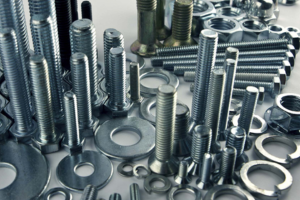
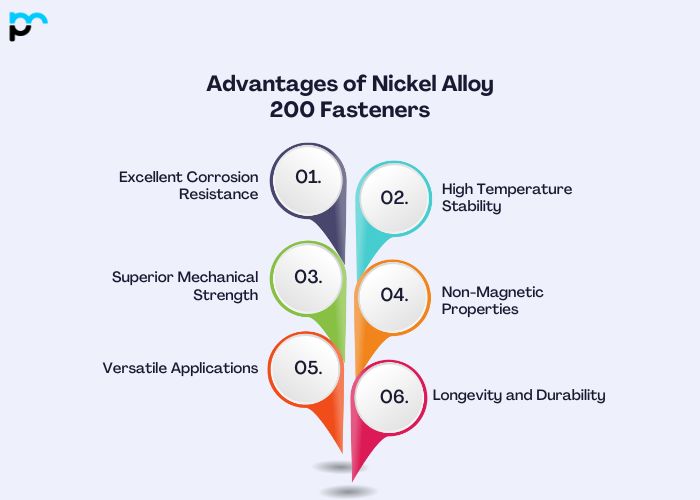
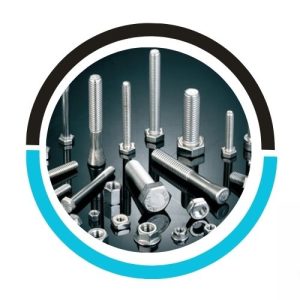
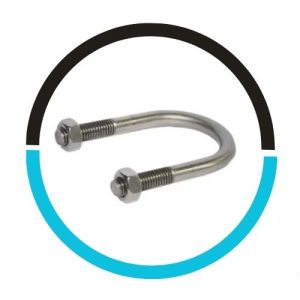
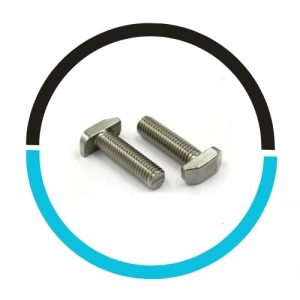
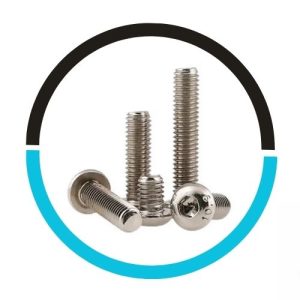
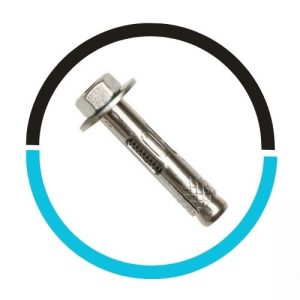
Nickel Alloy 200 Fasteners are hardware parts manufactured from Nickel 200, a commercially pure wrought nickel offering excellent corrosion resistance. These fasteners, comprising screws, bolts, nuts, and washers, see broad use in settings featuring elevated temperatures and corrosive chemicals, including the chemical processing, marine, and aerospace industries. Nickel Alloy 200 Fasteners deliver outstanding mechanical strength, thermal stability, and resistance to numerous acids and alkalis, making them well suited for critical applications where reliability and longevity are essential.
| Fasteners Material Specification | ASME SB 160/ ASTM B 160, UNS 2200 Bolts |
|---|---|
| Sizes | Metric Sizes – M2 to M100 & Inch Size- 1/8” to 10” |
| Thread | Unified, Metric, Acme, British Imperial, Special requirements |
| Dimentional Standard | JIS, BS, IS, ASME, ANSI, ISO, GB, ASTM, DIN, UNI |
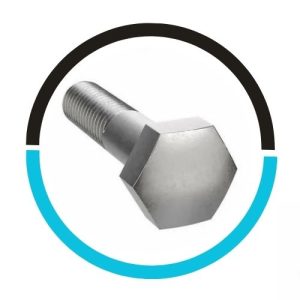
| High Nickel Bolt |
|
| Bolt Dimensional Standards | ASME B18.31.2, ASME B18.31.1M, ASME B18.31.3, ASME B16.5, ASME B18.2.3.1, ASME B18.2.3.3M, ASME B18.2.3.5M, ASME B18.6.7M etc. |
| Bolting Specification | ASTM A193/A193M, ASTM A307, ASTM A320/A320M, ASTM A437/A437M, ASTM A453/A453M, ASTM A489, ASTM A540/A540M etc. |
| Testing Standards | E18, E21, E112, E139, E150, E151, E292, E328, E566, E709, F606/F606M, F1940, A962/A962M, A788/A788M. |
| Certification | EN 10204 3.1, EN10204 3.2, PED 2014/68/EC, MERKBLATT AD 2000 W2/W7/W10, API 20 E BSL 1 / BSL2, NACE MR 0175, NACE MR 0103. |
| Coating | ASTM A 153/153M HDG, ASTM A F2329/F2329M HDG, ASTM F2833 ZnAl+, ASTM A3019/3019M(HDG), Teflon, PTFE, Xylan 1070 etc. |
| Fasteners/ Bolts Size | M3, M16, M30, M36, M6, M12, M24, M10, M2.5, M20, M5, M2, M14, M4, M8, to M160 |
| Length | 3 to 200 mm |
| Bolts, Studs Threads: | UNC, METRIC, BSW, UNF, BSF, or as required |
| Fasteners Standard: | ANSI – American National Standards Institute |
Density | Elongation | Yield Strength (0.2%Offset) | Melting Point | Tensile Strength |
8.9 g/cm3 | 45 % | Psi – 21500 , MPa – 148 | 1446 °C (2635 °F) | Psi – 67000 , |
|
Nickel 200 |
C |
Ni |
Mn |
Mo |
Si |
P |
Fe |
Cu |
S |
Cr |
|
0.15 max |
99.0 min |
0.35 max |
– |
0.1 max |
– |
0.4 max |
0.25 max |
0.01 max |
– |
At Santossteel, we take pride in being the largest supplier and manufacturer in the Brazil, delivering advanced solutions for all your piping requirements. With cutting-edge production facilities strategically situated in the Brazil, we maintain an extensive inventory of more than 25,000 tons of premium-quality materials kept readily on hand in stock.
Get in touch with us to receive a fast quote for your requirement.
We supply these Nickel Alloy 200 Fasteners in accordance with DIN, ISO, JIS or ANSI Standard.
Nickel Alloy 200 Fasteners find uses as varied as the sectors they support, led mainly by the aerospace, railway, construction and automotive sectors along with petrochemical, nuclear, medical, Oil & Gas, Chemical, Pharmaceutical, Food & Beverage, Nuclear, Thermal Power plants, Paper and Pulp, marine and mining, etc.
Yes Nickel Alloy 200 Fasteners can be recycled. Nickel on its own is a material that recycles very well, and Nickel Alloy 200 is no different. The recycling of Nickel Alloy 200 Fasteners consists of gathering the used fasteners, treating them to isolate the Nickel from other substances, and subsequently melting the Nickel down again to create new Nickel Alloy products.
Nickel Alloy 200 Fasteners typically comply with a range of industry standards and certifications, guaranteeing quality and conformity to specifications. Frequently used standards include ASTM B160 for Nickel Rod and Bar, ASTM B162 for Nickel Plate, ASTM B161 for Nickel Seamless Pipe and Tube, and ASTM B366 for Nickel Alloy Butt Weld Fittings. On top of this, Nickel Alloy 200 Fasteners may adhere to international standards like ASME, DIN, and ISO. Such fasteners are frequently supplied with material certifications and test reports that confirm characteristics like chemical composition, mechanical strength, and corrosion resistance, guaranteeing they satisfy the demands of rigorous applications across industries including chemical processing, aerospace, marine, and electronics.
Yes, Fasteners made from Nickel Alloy 200 are extremely resistant to corrosion. Nickel 200, which serves as the base material for these fasteners, provides outstanding resistance to a range of corrosive conditions, such as acids, alkalis, and saltwater. This resistance to corrosion makes Nickel Alloy 200 Fasteners a great fit for uses in sectors like chemical processing, marine, aerospace, and electronics, where contact with aggressive chemicals or environments is frequent. On top of that, Nickel 200 shows resistance to atmospheric corrosion, which further improves the durability and dependability of fasteners deployed in outdoor or high-humidity conditions.
Ensuring the quality of Nickel Alloy 200 Fasteners requires several important steps. Start by procuring these fasteners from trustworthy suppliers who have a demonstrated history of reliability and compliance with industry standards. Perform detailed inspections when the shipment arrives, examining dimensional accuracy, surface finish, and material composition. Apply rigorous testing approaches like mechanical testing, corrosion resistance evaluations, and non-destructive testing to confirm performance qualities. Keep quality control a priority across the entire manufacturing process, including correct handling, machining, and finishing methods. Consistently inspect and service equipment to avoid defects and guarantee uniformity in production. Record and examine any quality problems to support ongoing improvement.
Email: sales@santossteel.com