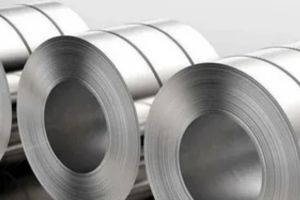
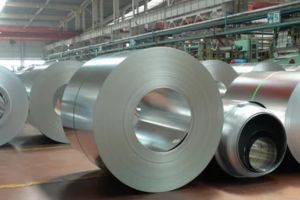
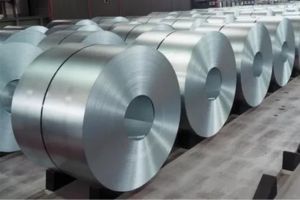
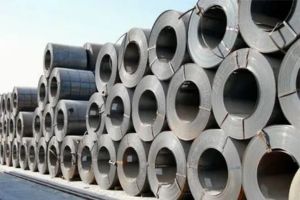
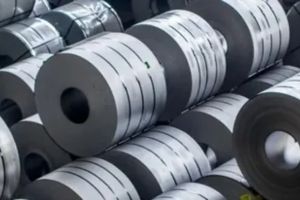
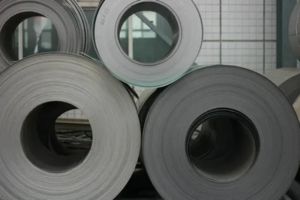
Inconel 825 Coils stand out as top-tier heating and cooling components, prized for their outstanding durability in demanding industrial applications. Purpose-built from a blend of nickel, iron, and chromium, these alloys demonstrate remarkable resistance to high temperatures, corrosion, and harsh environmental factors. Broadly adopted across aerospace, chemical processing, and nuclear industries, Inconel 825 Coils thrive in settings that require unfailing reliability. With a sturdy construction that guarantees consistent performance under extreme conditions, they solidify their standing as the preferred choice for applications calling for long-lasting and reliable coil solutions.
Specifications : ASTM B424 / ASME SB424
Width : 1000mm, 1219mm, 1500mm, 1800mm, 2000mm, 2500mm, 3000mm, 3500mm, and so on
Length : 2000mm, 2440mm, 3000mm, 5800mm, 6000mm, and so on
Thickness : 0.3 mm up to 120 mm
Hardness : Soft, Hard, Half Hard, Quarter Hard, Spring Hard and more.
Finish : Hot rolled (HR), Cold rolled coils (CR), 2B, 2D, BA NO(8), SATIN (Met with Plastic Coated)
Form : Plain Coils, Shim Coils, Strip, Flats, Blank (Circle), Ring (Flange)
| Density | Melting Point | Yield Strength (0.2%Offset) | Tensile Strength | Elongation |
| 8.14 g/cm3 | 1400 °C (2550 °F) | Psi – 32,000 , MPa – 220 | Psi – 80,000 , MPa -550 | 30 % |
| Grade | Ni | C | Fe | Si | Mn | S | Al | Ti | Cu | Cr | Mb |
| Incoloy 825 | 38.0 – 46.0 | 0.05 max | 22.0 min | 0.5 max | 1.0 max | 0.03 max | 0.2 max | 0.6 – 1.2 | 1.5 – 3.0 | 19.5 – 23.5 | 2.5 – 3.5 |
At Santossteel, we take pride in being the largest supplier and manufacturer in the Brazil, delivering advanced solutions for all your piping requirements. With cutting-edge production facilities strategically positioned in the Brazil, we maintain an extensive inventory of more than 25,000 tons of top-quality materials kept ready in stock.
Get in touch with us to receive a fast quote for your requirement.
We supply these Inconel 825 Coils in accordance with DIN, ISO, JIS or ANSI Standard.
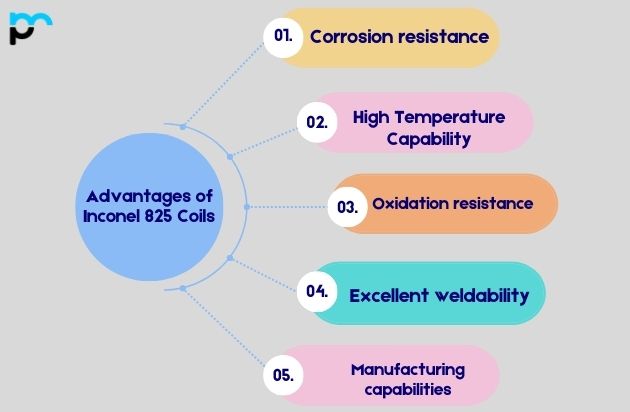
Corrosion resistance: A key benefit of Inconel 825 is how well it resists corrosion. It performs well in both reducing and oxidizing settings that contain sulfuric and phosphoric acids, organic acids and seawater. This makes it a good fit for the chemical industry, marine environment and acid gas wells.
High Temperature Capability: Inconel 825 keeps its mechanical properties at high temperatures, which makes it well suited to high temperature uses such as furnace interiors, heat exchangers and water heaters
Oxidation resistance: The alloy’s chromium content delivers outstanding resistance to oxidation at high temperatures, ensuring it stays durable and reliable when used in oxidative environments
Excellent weldability: Inconel 825 can be welded with ease using standard welding methods, which enhances its versatility and makes it simple to fabricate.
Manufacturing capabilities: The alloy is cold worked, heat treated, and intricate shapes and materials are made through standardized machining processes
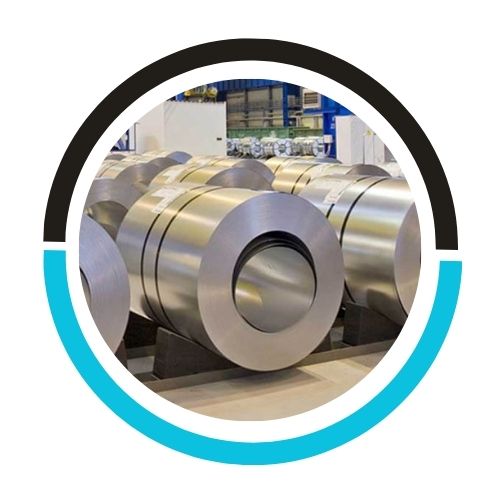
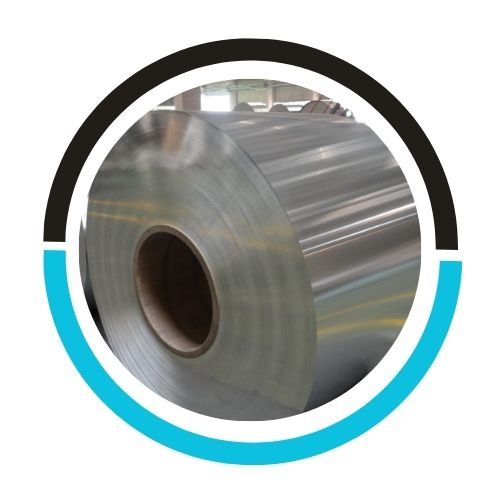
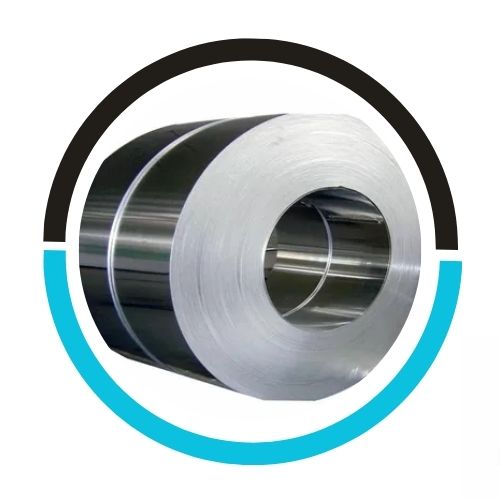
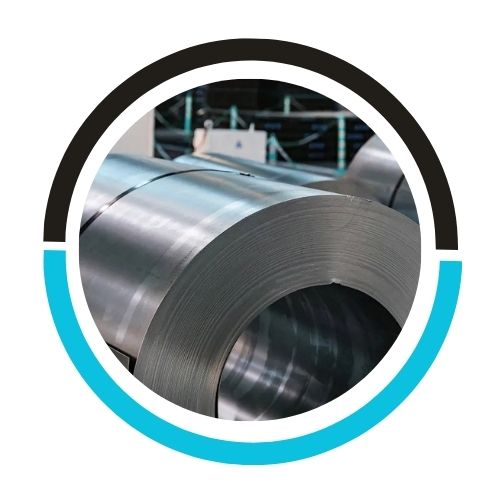
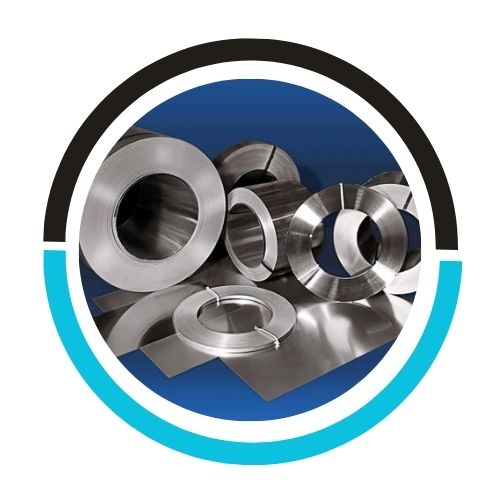
Inconel 825 Coils find uses that are as varied as the industries relying on them, led chiefly by the aerospace, railway, construction and automotive sectors along with petrochemical, nuclear, medical, Oil & Gas, Chemical, Pharmaceutical, Food & Beverage, Nuclear, Thermal Power plants, Paper and Pulp, marine and mining, etc.
Chemical Processing: Coils fabricated from Inconel 825 serve in chemical processing systems such as heat exchangers, tanks, and reactors that deal with corrosive chemicals.
Oil and Gas Industry: Parts subjected to corrosive conditions in oil and gas production plants, such as pipelines, valves, and tubing, frequently rely on Inconel 825 coils.
Marine Applications: Thanks to their resistance to seawater and brine solutions, Inconel 825 coils are used in marine equipment, which makes them appropriate for offshore platforms, seawater piping systems, and shipbuilding.
Pollution Control: Machinery deployed in pollution control setups, like scrubbers and stack liners, commonly makes use of Inconel 825 coils because of their resistance to acidic gases and fumes.
Desalination Plants: Inconel 825 coils are applied in desalination facilities for heat exchangers and piping systems that process brine and seawater.
Nuclear Industry: Inconel 825 coils have uses in the nuclear sector for parts exposed to corrosive conditions, including nuclear waste storage tanks and reactor vessels.
Understanding your application requirements: Pinpoint the particular needs of your application, including temperature, pressure, corrosion resistance, and mechanical properties.
Corrosion resistance: Inconel 825 is recognized for its outstanding resistance to corrosion, particularly in harsh conditions such as sulfuric acid, phosphoric acid, and seawater. Ensure that the coils you select deliver the corrosion resistance your role demands.
Thermal resistance: Take into account the temperature range over which the coils will function. Inconel 825 offers outstanding high-temperature properties, featuring a maximum service temperature of 870°C (1600°F). Verify that the coils can handle the heat present in your application.
Mechanical properties: Establish the mechanical properties your application calls for, including absorption strength, power output, and length. Select coils whose technical characteristics align with your specifications.
Size and thickness: Think about the dimensions and thickness of the coils required for your application. Confirm that coils come in the appropriate sizes and shapes (e.g., flat coils, round coils) to suit your equipment and installation requirements.
Yes, Inconel 825 coils can be joined through several techniques, including gas tungsten arc welding (GTAW), shielded metal arc welding (SMAW), and submerged arc welding (SAW).
To choose Inconel 825 coils that fit your application, weigh considerations such as temperature, corrosion resistance, mechanical properties, and cost. Seek advice from material specialists for accurate direction.
Inconel 825 coils are typically ill-suited for cryogenic use because their reduced ductility and risk of embrittlement at low temperatures raise concerns about performance and integrity.
Inconel 825 coils call for tooling fitted with high-speed steel or carbide tips, reduced cutting speeds, plenty of coolant, and annealing after machining to avoid work hardening and preserve corrosion resistance.