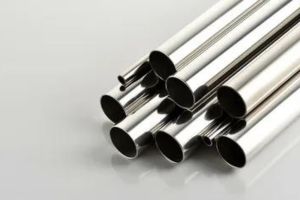
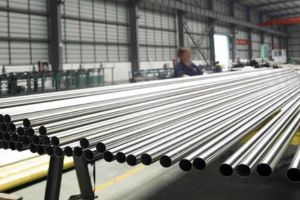
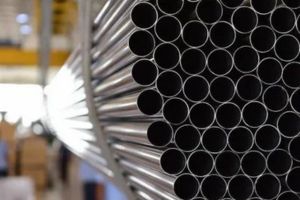
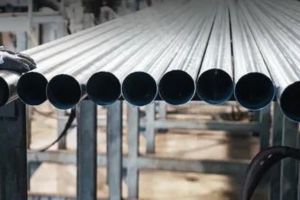
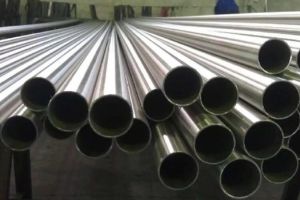
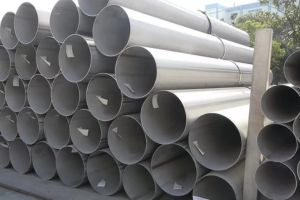
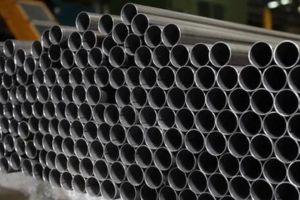
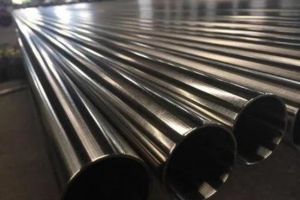
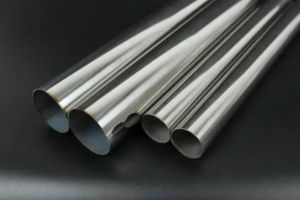
Elevate your industrial operations to unrivaled heights of excellence with our top-tier Hastelloy B3 Pipes, prominently showcased across our product pages. Carefully built with precision engineering, these pipes embody unbeatable quality and durability, thoughtfully designed to surpass the stringent demands of varied industrial settings. Celebrated for their outstanding resistance to corrosive substances, our Hastelloy B3 Pipes serve as proof of dependability, delivering peak performance even under the harshest conditions. Meeting industry standards, our pipes ensure exceptional durability and long service life, offering unwavering support to your operations. As a trustworthy supplier, we place customer satisfaction first, providing customized solutions, competitive pricing, and rapid delivery. Whether for construction, infrastructure, or industrial projects, rely on our Hastelloy B3 Pipes to reliably perform beyond what you expect.
| Standard | ASTM B622, B619 / ASME SB622, SB619 |
| Standard | ASTM, ASME and API |
| Size | 15 NB UP TO B3 NB IN SCH 5S, 10S,10, 20, 40S, 40, STD, 60, 80S, 80, XS, 100, 120, 140, 160 & XXS |
| Length | Single Random, Double Random & Required Length, Cut Length |
| End | Plain End, Beveled End, Treaded |
| Grade | C | Cr | Mo | Si | Al | Fe | Ni |
| Hastelloy B3 | 0.01 max | 1.5 | 28.5 | 10 max | 0.50 max | 1.5 | 65.0 mi |
| Element | Density | Melting Point | Tensile Strength | Yield Strength (0.2%Offset) | Elongation |
| Hastelloy B3 | 9.2 g/cm3 | 1370 °C (2550 °F) | Psi – 1,15,000 , MPa –760 | Psi – 52,000 , MPa – 350 | 40% |
Reach out to us for a fast quote tailored to your needs.
We provide these Hastelloy B3 Pipes in accordance with DIN, ISO, JIS or ANSI Standard.
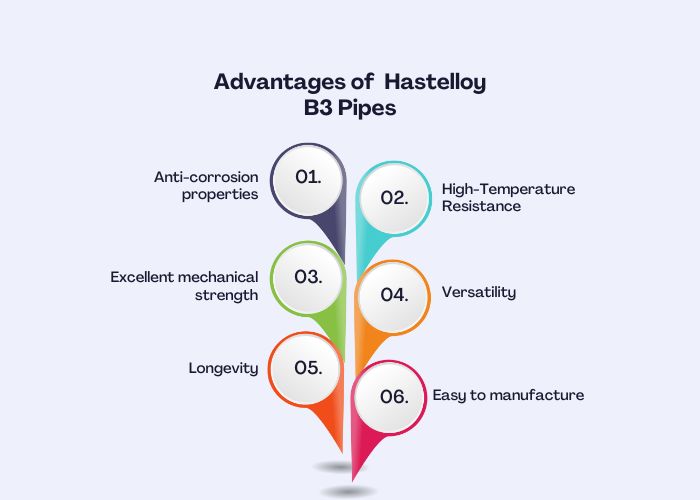
Anti-corrosion properties: Hastelloy B3 offers excellent protection against corrosion, particularly when exposed to reducing acids like hydrochloric acid, sulfuric acid, phosphoric acid, acetic acid, and other aggressive chemicals.
High-Temperature Resistance: Hastelloy B3 pipe is able to endure elevated temperatures with very little deterioration while in use. This characteristic matters for uses in aerospace, chemical processing, and power generation sectors where high temperatures frequently occur.
Excellent mechanical strength: Hastelloy B3 retains its strength and structural soundness even at high temperatures, which makes it well-suited for uses where mechanical stress and strain play a decisive role
Versatility: Hastelloy B3 pipes are suitable for a wide range of uses thanks to their corrosion resistance and ability to handle high temperatures. They are frequently applied in the pharmaceutical, oil and gas, pharmaceutical, pulp and paper industries.
Longevity: The corrosion resistance and toughness of Hastelloy B3 pipes add to their durability, leading to an extended service life and reduced maintenance expenses over time
Easy to manufacture: Hastelloy B3 pipe is simple to fabricate, weld, and produce in a range of shapes and sizes, enabling it to be tailored to satisfy particular application needs.
Safety: Dependable, corrosion-resistant, and high-temperature-resistant Hastelloy B3 pipe improves safety in industrial uses that might result in hazardous conditions or environmental harm should a failure occur.
Cost-effectiveness: Even though it costs more upfront than certain other materials, the long life and efficiency of Hastelloy B3 pipes can deliver lifetime cost savings through lower maintenance, timing and replacement
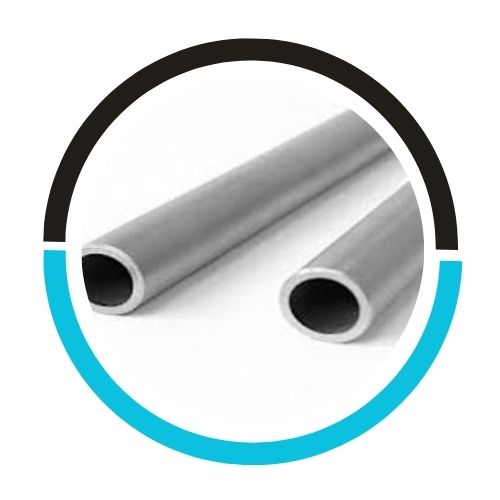
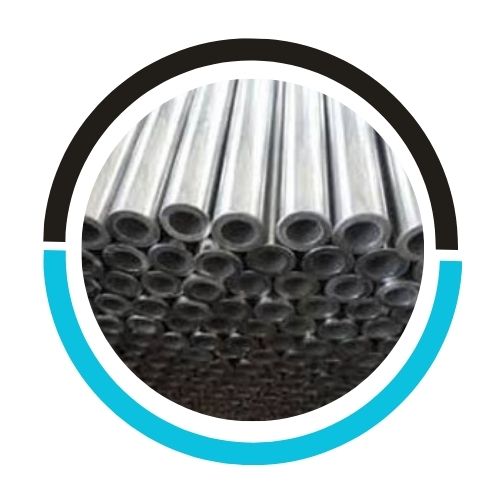
Chemical applications: Hastelloy B3 pipes see extensive use in the chemical sector for managing aggressive chemicals like hydrochloric acid, sulfuric acid, acetic acid, phosphoric acid, and more. They serve in reactors, heat exchangers, piping networks, and storage vessels.
Oil and Gas: Within the oil and gas sector, Hastelloy B3 pipelines are deployed in applications dealing with acidic gas conditions where hydrogen sulfide (H2S) is present, and they serve in processing units, pipelines, and equipment throughout the refinery sector.
Pharmaceutical Industry: Hastelloy B3 pipe is applied in the pharmaceutical sector wherever corrosive substances are involved. Reactive materials like acids and bases are conveyed to pharmaceutical facilities.
Pulp and Paper Industry: Within the pulp and paper sector, Hastelloy B3 pipe is employed in refineries and chemical facilities where corrosive chemicals serve to wash and process pulp
Wastewater Treatment: Wastewater treatment facilities rely on Hastelloy B3 pipes to manage the corrosive chemicals and acids tied to water treatment operations, such as wastewater treatment, desalination, and purification
Power generation: Hastelloy B3 pipe is utilized in power plants, particularly in systems where acidic solutions are applied for cooling and heat exchangers
Aerospace and Safety: In aerospace and defence applications, Hastelloy B3 pipes are used in components and systems demanding strong corrosion resistance, including fuel systems, hydraulic systems, and exhaust gases
Hastelloy B3 Pipes serve uses as varied as the industries they support, led mainly by the aerospace, railway, construction and automotive sectors, along with petrochemical, nuclear, medical, Oil & Gas, Chemical, Pharmaceutical, Food & Beverage, Nuclear, Thermal Power plants, Paper and Pulp, marine and mining, etc.
Corrosion resistance: Hastelloy B3 is recognized for its outstanding resistance to corrosion, particularly in corrosion-reducing settings. Please make sure the pipes are appropriate for your particular hot environment, whether that involves acids, alkalis, or other chemicals.
Temperature and Pressure: Verify the operating temperature and pressure conditions in which the pipes will be situated. Hastelloy B3 pipe possesses excellent thermal stability and can endure high temperatures, but selecting a pipe rated for the intended conditions is important.
Size and Design: Take into account the size and thickness of the pipe required for your project. Make certain that the necessary diameter, wall thickness and length are satisfied.
Quality and Compliance: Make sure the piping conforms to relevant industry standards and specifications, such as ASTM, ASME, or ANSI. Request certificates or documentation confirming compliance with quality standards.
Construction requirements: Take into consideration any particular construction requirements, such as welding or bending, and make sure that the piping fits the intended construction schedule.
Cost and Budget: Examine the cost of Hastelloy B3 pipe to confirm it fits within your budget limitations. While Hastelloy B3 provides corrosion resistance, it may carry a high price relative to other materials.
Supplier Reputation : Select a reputable supplier with a proven history of delivering high quality Hastelloy B3 pipe. Investigate the supplier’s reputation, customer reviews, and dependability of on-time delivery.
Compatibility: Confirm compatibility with other materials or components in your system to avoid issues such as galvanic corrosion or chemical reactions.
No, Hastelloy B3 pipes are rust-proof. Hastelloy B3 is a nickel-molybdenum alloy recognized for its outstanding corrosion resistance, especially in acidic settings. It retains its structural integrity even under extremely corrosive conditions, which makes it a favored option for a range of industrial uses where resisting corrosion is essential.
To maintain Hastelloy B3 pipes, clean them routinely using a solution of mild detergent and water to eliminate surface contaminants. Steer clear of abrasive tools or cleaners that might scratch the surface. It is advisable to inspect them periodically for indications of corrosion or damage, and to resolve any problems quickly to guarantee peak performance and durability.
Yes, Hastelloy B3 pipes work well for hygienic and sanitary uses. Because they offer strong corrosion resistance and pair well with a range of chemicals, they are perfect for sectors like pharmaceuticals, food processing, and biotechnology, where product purity and cleanliness are essential, guaranteeing safe and dependable performance.
Yes, Hastelloy B3 pipes can be joined through widely used welding methods including TIG (Tungsten Inert Gas) welding, MIG (Metal Inert Gas) welding, and SMAW (Shielded Metal Arc Welding). Nevertheless, it’s crucial to apply correct welding procedures and filler materials to preserve the alloy’s corrosion resistance and mechanical properties.
| Wall | Sizes ( O.D.) |
|---|---|
| .010 | 1/16″ , 1/8″ , 3/16″ |
| .020 | 1/16″ , 1/8″ , 3/16″ , 1/4″ , 5/16″ , 3/8″ |
| .012 | 1/8″ |
| .016 | 1/8″ , 3/16″ |
| .028 | 1/8″ , 3/16″ , 1/4″ , 5/16″ , 3/8″ , 1/2″ , 3/4″ , 1″ , 1 1/2″ , 2″ |
| .035 | 1/8″ , 3/16″ , 1/4″ , 5/16″ , 3/8″ , 7/16″ , 1/2″ , 16″ , 5/8″ , 3/4″ , 7/8″ , 1″ , 1 1/4″ , 1 1/2″ , 1 5/8″ , 2″ , 2 1/4″ |
| .049 | 3/16″ , 1/4″ , 5/16″ , 3/8″ , 1/2″ , 16″ , 5/8″ , 3/4″ , 7/8″ , 1″ , 1 1/8″ , 1 1/4″ , 1 1/2″ , 1 5/8″ , 2″ , 2 1/4″ |
| .065 | 1/4″ , 5/16″ , 3/8″ , 1/2″ , 16″ , 5/8″ , 3/4″ , 7/8″ , 1″ , 1 1/4″ , 1 1/2″ , 1 5/8″ , 1 3/4″ , 2″ , 2 1/2″ , 3″ |
| .083 | 1/4″ , 3/8″ , 1/2″ , 5/8″ , 3/4″ , 7/8″ , 1″ , 1 1/4″ , 1 1/2″ , 1 5/8″ , 1 7/8″ , 2″ , 2 1/2″ ,3″ |
| .095 | 1/2″ , 5/8″ , 1″ , 1 1/4″ , 1 1/2″ , 2″ |
| .109 | 1/2″ , 3/4″ , 1″ , 1 1/4″ , 1 1/2″ , 2″ |
| .120 | 1/2″ , 5/8″ , 3/4″ , 7/8″ , 1″ , 1 1/4″ , 1 1/2″ , 2″ , 2 1/4″ , 2 1/2″ , 3″ |
| .125 | 3/4″ , 1″ , 1 1/4″ , 1 1/2″ , 2″ , 3″ , 3 1/4″ |
| .134 | 1″ |
| .250 | 3″ |
| .375 | 3 1/2″ |
Email: sales@santossteel.com