Home > Other Material > Alloy 20 Forgings
Discover unmatched resilience and adaptability with our Alloy 20 Forgings, thoughtfully custom-built to perform in the toughest industrial settings. Designed with meticulous attention to detail and reinforced with remarkable strength, our Alloy 20 stainless steel forgings set a new standard for dependability in vital applications. Offering superior corrosion resistance and exceptional mechanical qualities, our forgings outperform ordinary options, delivering consistent performance where others come up short. From chemical processing facilities to pharmaceutical plants and petrochemical refineries, our broad range of Alloy 20 Forgings ensures lasting durability and reliable operation. Dedicated to exceeding customer expectations, we deliver customized solutions, competitive pricing, and rapid delivery, enabling smooth integration into your projects with accuracy and efficiency. Rely on our top-quality forgings, backed by a relentless commitment to quality and performance, to lift your ventures to new heights of achievement.
| Standard | : | ASTM /ASME B462 / SB462 |
| Dimension | : | ASTM,DIN, BS,GB, IS and all International Standards |
| Forged Between | : | 2300/1700ºF (1260/930ºC) and air cooled |
| Severe Reductions | : | Ingot breakdown, Roll forging, Drawing, Blocking and Backward extrusion- 2300ºF (1260ºC). |
| Moderate Reductions | : | Finish forging and upsetting- 2200ºF (1200ºC). |
| Slight Reductions | : | Coining, restriking and end upsetting- 2050ºF (1120º). |
| Type | : | Chain Link, D Shackle, Bow Shackle etc. |
| Grade | C | Mn | Si | S | Cu | Ni | Cr | Fe | Mo | P |
| Alloy 20 | 0.07 max | 2.00 max | 1.00 max | 0.035 max | 3.00 – 4.00 | 32.00 – 38.00 | 19.00 – 21.00 | 29.85 min* | 2.00 – 3.00 | 0.045 max |
| Element | Density | Melting Point | Tensile Strength | Yield Strength (0.2%Offset) | Elongation |
| Alloy 20 | 8.1 g/cm3 | 1443 °C (2430 °F) | Psi -80,000, MPa -551 | Psi – 35,000, MPa – 241 | 30 % |
At Santossteel, we take pride in being the largest supplier and manufacturer in the Brazil, delivering advanced solutions for every piping requirement you have. With cutting-edge manufacturing facilities strategically positioned in the Brazil, we maintain an extensive stock of more than 25,000 tons of top-quality materials kept readily on hand.
Reach out to us for a fast quote on your requirement.
Alloy 20 Forgings are supplied by us in accordance with DIN, ISO, JIS or ANSI Standard.
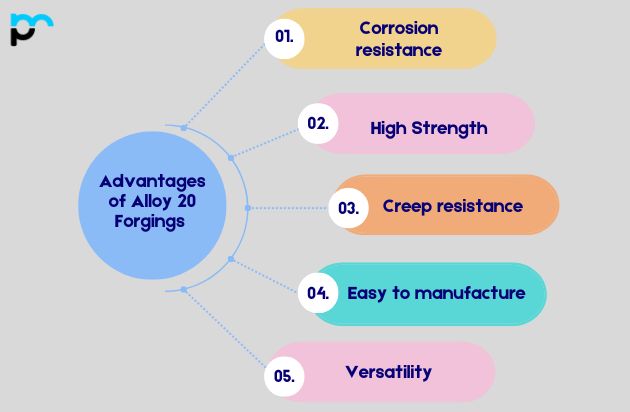
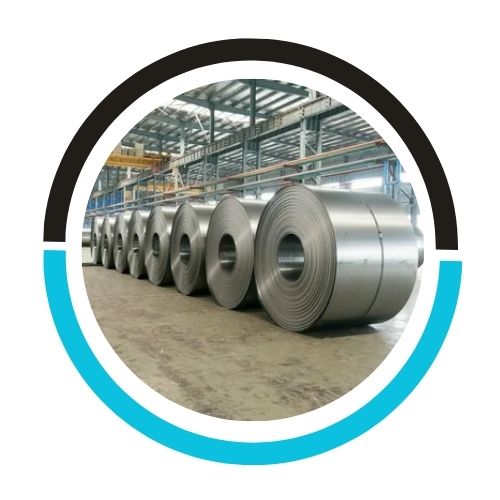
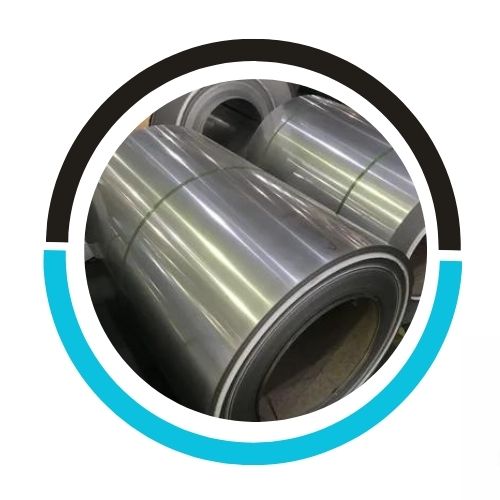
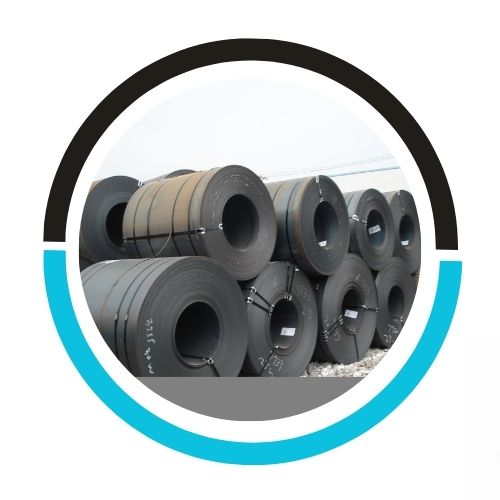
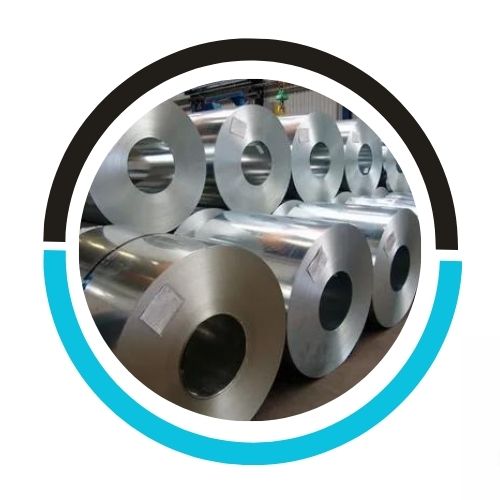
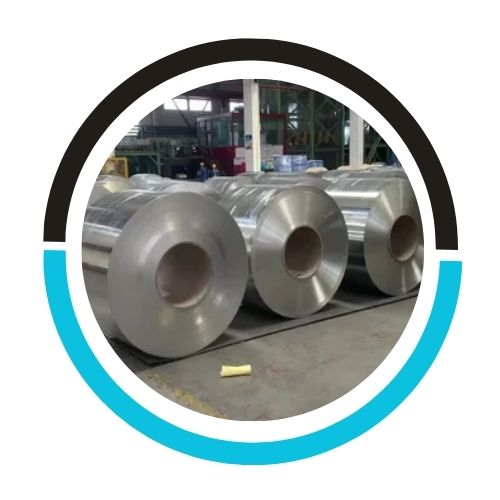
Alloy 20 Forgings uses span across a wide range of sectors, led chiefly by the aerospace, railway, construction and automotive fields, along with petrochemical, nuclear, medical, Oil & Gas, Chemical, Pharmaceutical, Food & Beverage, Nuclear, Thermal Power plants, Paper and Pulp, marine and mining, etc.
Yes, Alloy 20 forgings are recyclable once their service life ends. Nickel-based alloys such as Alloy 20 rank among the most recyclable materials available. They can be melted and repurposed to make new forgings or other items, supporting sustainability initiatives and lowering the need for virgin raw materials.
Alloy 20 forgings are typically advised against for cryogenic uses because of their diminished toughness and susceptibility to embrittlement at low temperatures. Although they provide outstanding corrosion resistance, other nickel-based alloys such as Inconel are favored for cryogenic settings that demand superior mechanical properties at low temperatures.
Yes, Alloy 20 forgings are well-suited for underground applications where resisting corrosion is essential. They provide outstanding protection against corrosion caused by soil, moisture, and various underground contaminants, which makes them appropriate for pipelines, storage tanks, and other infrastructure located in underground settings, especially where soil conditions are corrosive.
Choose appropriate Alloy 20 forgings by evaluating corrosion resistance requirements, mechanical properties, fabrication needs, environmental conditions, and cost. When needed, seek expert advice to confirm suitability. Weigh factors like chemical exposure, temperature, fabrication techniques, and long-term cost-effectiveness to reach a well-informed decision.
