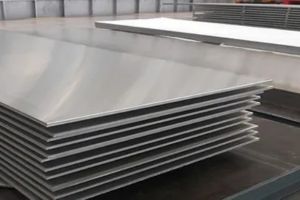
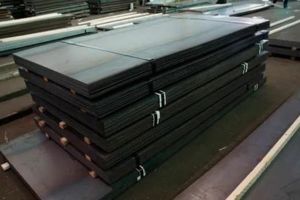
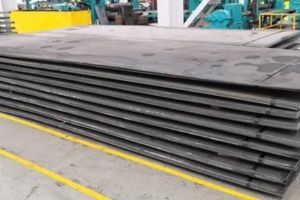
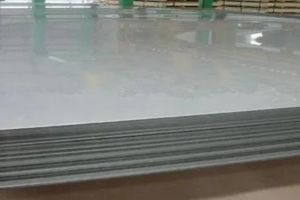
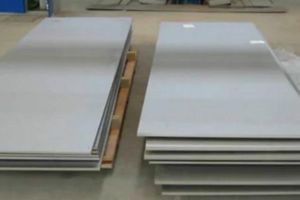
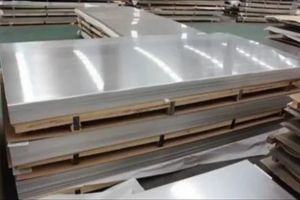
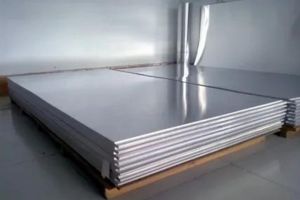
Invar 36 Sheet and Plates Manufacturer & Supplier in Rio de Janeiro, Brazil.
Invar 36 Industrial Sheet and Plates Price In Brazil, UNS K93603 Sheets Dealer In Belo Horizonte, Invar 1.3912 Sheets Exporter In Brazil, UNS K93600 Sheet, Invar 36 Plates Dealer In Sao Paulo, Invar 36 Strips Manufacturer In Rio de Janeiro, Brazil.
Table of Contents
Experience outstanding quality in Invar 36 Sheets and Plates through our extensive selection, thoughtfully custom-made to satisfy varied industrial and mechanical needs. Built with rigorous accuracy and firm adherence to industry standards, our Invar 36 Sheets and Plates provide remarkable dimensional stability, low thermal expansion, and outstanding resistance to temperature changes across a broad spectrum of applications. Through tailored solutions, competitive pricing, and swift delivery, we remain dedicated to surpassing customer expectations. Enhance your projects with our reliable Invar 36 Sheets and Plates, backed by our steadfast commitment to excellence.
Soft, Hard, Half Hard, Quarter Hard, Spring Hard etc.
Value Added Service :
Cladding, Heat Treatment, Annealed, Pickling, Polish, Rolling, Cutting, Bending, Forging, Minor Fabrication Etc.
Chemical Composition of Invar 36 Sheet and Plates
Grade
C
Mn
Si
S
Co
Fe
Mo
Al
Invar 36
.008 max
.30 max
.15 max
.001 max
.35 max
63.0 max
.02 max
.03 max
Mechanical Properties of Invar 36 Sheet and Plates
Element
Tensile Strength
Yield Strength (0.2%Offset)
Elongation
Invar 36
KSI (MPa) 63 / (430) Max
KSI (MPa)-38 / (260) Max
30 %
Invar Alloy 36 Sheets and Plates Price In Brazil, Nickel Alloy 36 Sheets Dealer In Sao Paulo, Invar 36 Shims, Invar 36 Perforated Sheets Stockist In Belo Horizonte, Invar 36 Sheet Supplier In Sao Paulo, Brazil.
Top Invar 36 Sheet and Plates Manufacturing Company in Sao Paulo
At Santossteel, we take pride in being the largest supplier and manufacturer in the Brazil, delivering advanced solutions for every one of your piping requirements. With cutting-edge production facilities strategically situated in the Brazil, we maintain a huge inventory of more than 25,000 tons of top-quality materials kept ready in stock.
Reach out to us to receive a fast quote for your requirement.
We provide these Invar 36 Sheet and Plates in accordance with DIN, ISO, JIS or ANSI Standard.
Invar 36 Sheets Price In Brazil, Invar 36 Plain Plates Dealer In Rio de Janeiro, Alloy 36 Shim, Invar 36 Shim Sheets Exporter In Sao Paulo, Nilo 36 Hot Rolled Sheet Supplier In Brazil, Invar 36 Soft Plates Manufacturer In Rio de Janeiro, Brazil.
Advantages of Invar 36 Sheet and Plates
Low Thermal Expansion: A key benefit of Invar 36 is its remarkably low coefficient of thermal expansion. As a result, it expands and contracts very little in response to temperature changes, which makes it well suited for applications that demand dimensional stability, such as precision instruments and scientific devices.
Stability Over Temperature: Invar 36 holds its dimensions and shape across a broad temperature range, from cryogenic temperatures up to about 400°C (750°F). Such stability is vital in settings where temperature fluctuations might otherwise cause materials to warp or distort.
Suitability for Joining: Invar 36 lends itself to welding by conventional techniques, which boosts its flexibility during manufacturing. This makes it possible to produce intricate shapes and structures without sacrificing its thermal expansion characteristics.
High Strength and Toughness: Invar 36 shows solid mechanical strength and toughness, rendering it durable and dependable for a range of applications. It can endure mechanical stress and vibrations without notable deformation.
Compatibility with Other Materials: Thanks to its stable thermal properties, it can be paired with other materials, including ceramics and various metals. This makes it a good fit for composite structures in which different materials must function together seamlessly.
Types of Invar 36 Sheet and Plates
Invar 36 Sheets
Invar Alloy 36 Sheets
Invar UNS K93600 Sheet
Invar 36 Hot Rolled Sheet
Invar 36 HR Sheets
Invar 36 Cold Rolled Plates
Application Industry
Owing to their outstanding characteristics, Invar 36 Sheet and Platesserve as vital elements throughout numerous industrial fields. Celebrated for their resistance to corrosion, they are broadly used in marine settings, withstanding the harsh demands of saltwater contact with durability and dependability. Within the construction sector, stainless steel fasteners are central to structural assemblies, delivering firm connections while preserving structural soundness in outdoor and exposed conditions.
Oil & Gas Industry
Aviation Industry
Petro Chemical Industry
Power Generation Industry
Can Invar 36 Sheet and Plates be recycled after use?
Yes, Invar 36 Sheet and Plates are recyclable once their service life ends. This alloy, made up mainly of iron and nickel, can be processed through standard metal recycling methods. Recycling allows valuable metals to be recovered and lessens the environmental burden tied to mining and producing new materials.
Invar 36 Hot Rolled Plates Price In Brazil, Bright Annealed Invar 36 Sheet and Plates Dealer In Sao Paulo, Mirror Finish Invar 36 Plate Exporter In Brazil, Pernifer 36 Sheets, 36 Invar Plates, Invar Alloy 36 Plates Manufacturer In Rio de Janeiro, Brazil.