Home > Stainless Steel > Stainless Steel 304L Bars
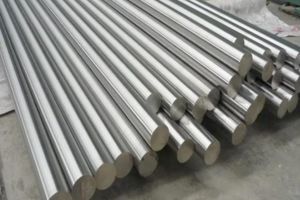
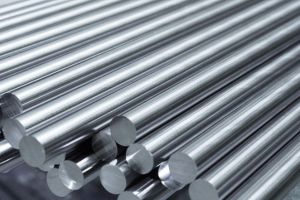
Embark on a path of excellence with our Stainless Steel 304L Bars, thoughtfully custom-built to raise your industrial pursuits to new heights. Inside our comprehensive product catalog, you’ll find a varied selection of premium solutions designed to satisfy a multitude of industrial needs. Our bars embody precision engineering, ensuring unmatched durability and corrosion resistance in compliance with the industry’s most demanding standards. Well known for our dedication to customer satisfaction, we provide customized options, competitive pricing, and fast delivery services. Whether for construction, manufacturing, or industrial uses, our Stainless Steel 304L Bars establish a benchmark for quality and reliability. Enhance your projects with our innovative solutions, supported by an unwavering commitment to excellence and performance.
| Material Grade | Stainless Steel 304L, UNS S30403, DIN 1.4306 |
| SS 304L Bar Dimensions | ASME, DIN, ASTM, AISI, EN, JIS, BS |
| SS 304L Bar Standards | A479, ASTM A276, ASTM A582, SA479, ASME SA276, ASTM A484, ASTM A473 |
| SS 304L Round Bar Type | Square Bars, Round Bars, Cold Drawn Bars, Hollow Bars, Hexagonal Bars, Hot Rolled Bars, Triangle Bar, Flat Bars, Threaded Bars, Rods, |
| Form | Flat Bar, Rings, Square, Round Rod, Rectangle, Ingot, Channel Bar, Rod, Precision Ground Bar, T-Bar, Profiles, Half Round Bar, Triangle, Hollow, Blocks, I/H Bar, Threaded, Hex (A/F), Billet, Round, Forging, etc. |
| SS 304L Square Bar | 4mm* 4mm~ 100mm* 100mm |
| SS 304L Flat Bar | Width: 10mm~ 500mm and Thickness: 2mm~ 100mm |
| SS 304L Hexagonal Bar | 2mm~ 100mm |
| Melting Point | Modulus of Rigidity | Coefficient of Expansion | Density | Modulus of Elasticity |
| 1420 °C | 70.3 kN/mm² | 17.6 μm/m °C (20 – 100°C) | 8.0 g/cm3 | 187.5 kN/mm² |
| Grade | Mn | P | Cr | Fe | S | Mo | C | Si | Ni |
| SS 304L | 2 max | 0.045 max | 17 – 19 | Bal | 0.030 max | – | 0.12 max | 1.00 max | 8 – 10 |
At Santossteel, we take pride in being the largest supplier and manufacturer in the Brazil, providing innovative solutions for all your piping requirements. With cutting-edge production facilities strategically situated in the Brazil, we maintain an extensive inventory of more than 25,000 tons of top-quality materials readily on hand in stock.
Reach out to us for a fast quote tailored to your requirement.
We supply these Stainless Steel 304L Bars in accordance with DIN, ISO, JIS or ANSI Standard.
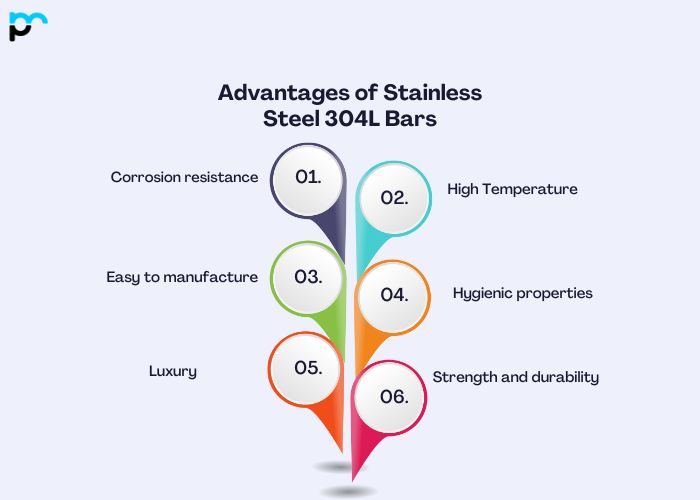
Corrosion resistance: A key benefit of 304L stainless steel is its outstanding resistance to corrosion, particularly when exposed to acid, alkali and chloride solutions. This quality makes it well-suited for corrosive settings found in the chemical industry and marine applications.
High Temperature: Stainless steel 304L maintains excellent mechanical properties even under high temperatures. This makes it a good choice for industrial furnaces and exhaust systems, where elevated temperatures are involved.
Easy to manufacture: 304L stainless steel is straightforward to manufacture, which makes it perfect for a range of applications such as machining, welding and fabrication. This manufacturing ease permits complex shapes and materials.
Hygienic properties: Stainless steel 304L is non-porous and simple to clean, making it appropriate for use where hygiene matters, such as in food processing, pharmaceutical and medical devices
Luxury: Stainless steel 304L features a smooth, shiny surface, which enhances its appearance. This makes it fitting for architectural and decorative uses, such as sleeves, fittings and trim.
Strength and durability: 304L stainless steel frames demonstrate exceptional strength and durability, guaranteeing longevity and reliability across a wide range of applications, including building materials and appliances
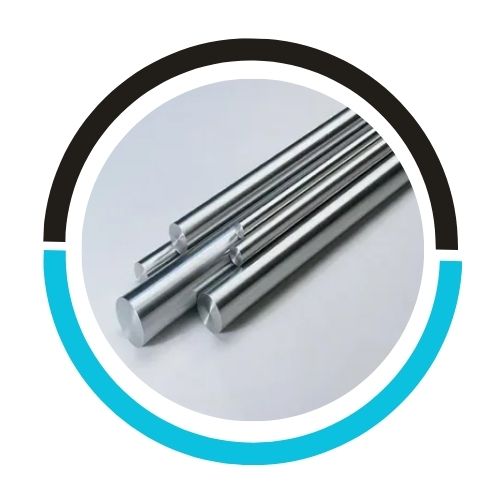
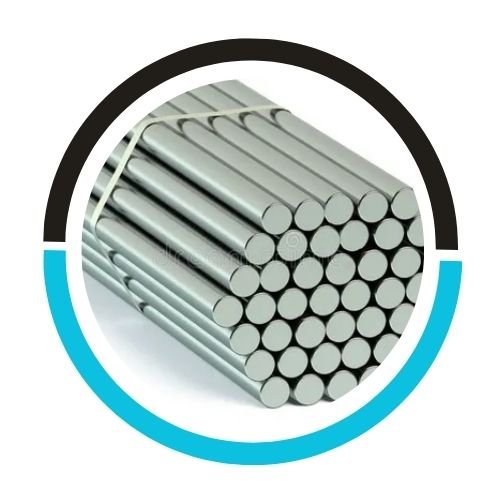
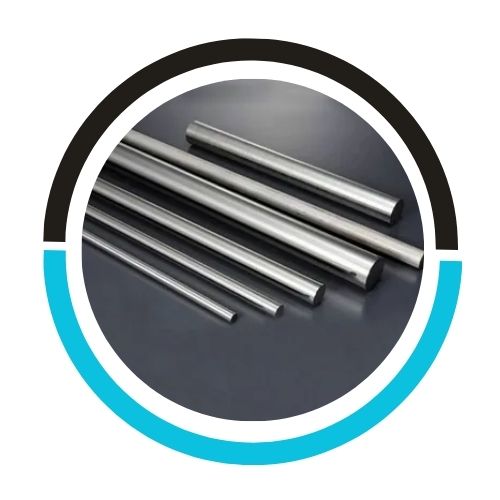
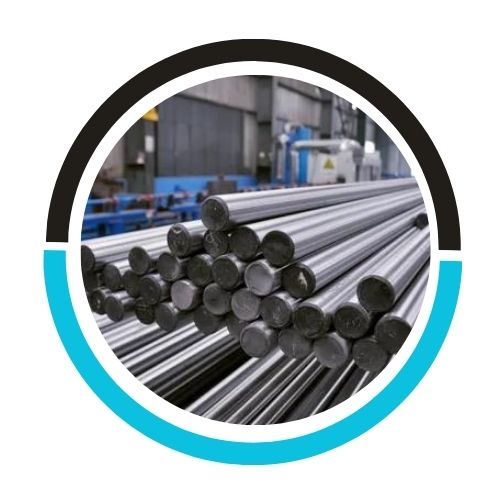
Stainless Steel 304L Bars applications are as varied as the industries they serve, driven mainly by the aerospace, railway, construction and automotive industries along with petrochemical, nuclear, medical, Oil & Gas, Chemical, Pharmaceutical, Food & Beverage, Nuclear, Thermal Power plants, Paper and Pulp, marine and mining, etc.
Construction: Stainless steel 304L bars are frequently employed in construction projects like beams, columns and supports, particularly in locations where water or chemical contamination poses a risk.
Manufacturing: This tape sees broad use in producing machines, tools and equipment that demand corrosion resistance and durability, for instance in making pumps, valves, fasteners and fittings
Food and Beverage Industry: Stainless steel 304L plates are favored in the food and beverage sector for uses such as food processing equipment, commercial kitchens and cleaning fittings thanks to their cleaning qualities and resistance to corrosion from acidic food items
Chemical Uses: Stainless steel 304L bars serve the chemical industry in producing vessels, tubes, pipes, and other equipment of considerable importance as chemicals resistant to corrosion and high temperatures
Yes, Stainless steel 304L bars are highly recyclable. They can be melted down and repurposed across a range of applications while retaining their properties. Recycling stainless steel lessens the demand for raw materials and reduces environmental impact, which makes it a sustainable option for the manufacturing and construction industries.
Stainless steel 304L bars are typically not advised for cryogenic applications because they are prone to embrittlement at low temperatures. In cryogenic settings, stainless steel grades containing more nickel, such as 304LN or 316L, are favored owing to their enhanced toughness and resistance to embrittlement under extremely low temperatures.
Stainless steel 304L bars may be appropriate for underground use depending on the particular circumstances. They provide solid corrosion resistance in moderately corrosive settings but might need extra protection, such as coatings or cathodic protection, in harsher underground conditions to prevent corrosion and guarantee long-term durability.
When installing stainless steel 304L bars, take into account factors like surface preparation to avoid contamination or corrosion, correct alignment and support to maintain structural integrity, suitable fastening techniques to avoid loosening, and compatibility with adjacent materials. Adhere to manufacturer instructions and industry best practices for the best installation results.
Email: sales@santossteel.com