Set out on a path of outstanding performance and dependability with our Hastelloy Forgings, thoughtfully custom-built to thrive in the most demanding industrial settings. Crafted with precision and reinforced with remarkable resistance to corrosion and high temperatures, our Hastelloy forgings set a new standard of excellence in critical applications. From corrosive chemical processing to demanding marine settings, our broad selection of Hastelloy Forgings guarantees unrivaled durability and steady functionality. Dedicated to surpassing your expectations, we provide customized solutions, competitive pricing, and prompt service, ensuring smooth integration into your projects with the greatest precision and efficiency. Rely on our premium Hastelloy forgings, backed by an unwavering commitment to quality and performance, to raise your ventures to new heights of success.
| Specifications | ASTM B564, ASME SB564 |
|---|---|
| Standard | DIN, ASTM, BS and all International Standards |
| Flat bar blocks | up to 27″ width and 15,000 lbs |
| Cylinders and sleeves | up to 50″ maximum O.D. and 65″ maximum length |
| Discs and hubs | up to 50″ diameter and 20,000 lbs |
| Rolled, hand forged or mandrel forged rings | up to 84″ maximum O.D. and 40″ maximum length |
| Rounds, shafts and step shafts | up to 144″ maximum length and 20,000 lbs |
At Santossteel, we take pride in being the largest supplier and manufacturer in the Brazil, delivering advanced solutions for all your piping requirements. With cutting-edge production facilities strategically situated in the Brazil, we maintain an extensive inventory of more than 25,000 tons of top-quality materials kept ready in stock.
Reach out to us for a fast quote on your requirement.
We supply these Hastelloy Forging in compliance with DIN, ISO, JIS or ANSI Standard.
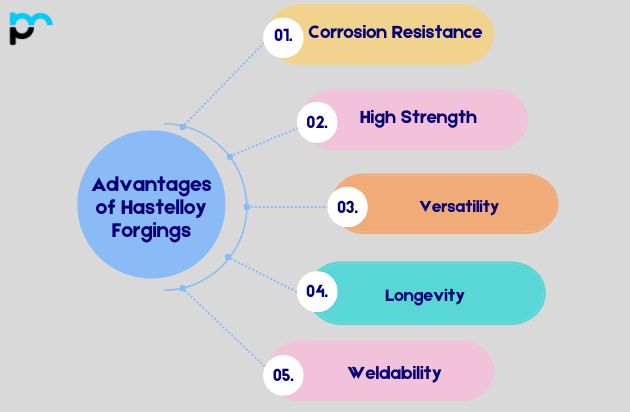
Corrosion Resistance: Hastelloy alloys are famous for their outstanding resistance to a broad range of corrosive settings, such as acids, chlorides, seawater, and oxidizing agents. This quality makes Hastelloy forgings well-suited for demanding chemical processing industries where corrosion resistance is essential.
High Strength: Hastelloy alloys demonstrate great strength and toughness even under high temperatures. As a result, Hastelloy forgings can endure mechanical stresses in harsh environments without sacrificing structural integrity.
Versatility: Hastelloy alloys are adaptable and function across an extensive range of temperatures and conditions. They are frequently selected for applications that demand both elevated temperature and corrosion resistance.
Longevity: Owing to their superb corrosion resistance characteristics, Hastelloy forgings generally offer a longer service life than many other materials in corrosive settings. This lowers maintenance expenses and downtime.
Weldability: Hastelloy alloys can usually be welded with standard welding methods. This provides flexibility in both manufacturing and repair operations.
Hastelloy Forgings have uses that are as varied as the sectors they cater to, propelled mainly by the aerospace, railway, construction and automotive sectors along with petrochemical, nuclear, medical, Oil & Gas, Chemical, Pharmaceutical, Food & Beverage, Nuclear, Thermal Power plants, Paper and Pulp, marine and mining, etc.
Chemical Processing: Hastelloy forgings find extensive application in the chemical processing sector for equipment like reactors, vessels, columns, and piping systems. They deliver outstanding resistance against a broad spectrum of corrosive substances, such as acids, chlorides, and oxidizing agents.
Oil and Gas: Within the oil and gas sector, Hastelloy forgings are used in offshore platforms, downhole equipment, valves, pumps, and tubing systems where withstanding corrosive fluids like brines and acids is critical.
Aerospace: Hastelloy alloys serve aerospace purposes for parts that demand high strength, durability, and resistance to corrosion and oxidation under elevated temperatures. Examples include turbine blades, combustion chambers, and structural components.
Corrosion Resistance Requirements: Identify the particular corrosive setting the forgings will encounter (for example, acids, chlorides, oxidizing agents). Various grades of Hastelloy alloys deliver differing degrees of corrosion resistance. For example, Hastelloy C-276 offers outstanding resistance against a broad spectrum of corrosive chemicals, whereas Hastelloy C-22 is especially resistant to oxidizing acids such as nitric acid.
Temperature and Pressure Conditions: Assess the operating temperature and pressure conditions of your application. Hastelloy alloys possess distinct temperature limits and mechanical characteristics at high temperatures. Confirm that the chosen alloy can endure the intended conditions without sacrificing performance.
Mechanical Properties: Take into account the mechanical strength and toughness needs of the forgings. Hastelloy alloys are recognized for their high strength and toughness, qualities that are essential for applications exposed to mechanical stresses, vibrations, and impacts.
Yes, Hastelloy forgings are recyclable once they have been used. These alloys, made up mainly of nickel, chromium, and molybdenum, hold significant value in recycling because of their high metal content. The recycling process allows these valuable metals to be recovered and reused across a range of industries, supporting sustainability and resource conservation efforts.
Yes, Hastelloy forgings work well for hygienic and sanitary uses. Because they resist corrosion and can endure aggressive cleaning agents, they are perfect for equipment in the pharmaceutical, biotechnology, and food processing sectors, where maintaining cleanliness and product purity are essential demands.
Hastelloy forgings typically resist galvanic corrosion when paired with other metals because of their built-in corrosion resistance. Nevertheless, under certain harsh environments or particular circumstances, galvanic corrosion may develop if adequate precautions are not implemented, such as insulation or cathodic protection measures.
Yes, Hastelloy forgings are suitable for underground applications. Their outstanding corrosion resistance makes them well-suited for environments where they might come into contact with soil, groundwater, and other corrosive materials. Correct installation methods and coatings can further improve their durability in underground settings.
Email: sales@santossteel.com