ER 2553 Welding Wire Manufacturer Supplier & Exporter in Sao Paulo, Brazil
ER 2553 Welding Wire in Rio de Janeiro, ER 2553 Filler Welding Wire Stockist, ER 2553 Inert Gas Welding Wire in Sao Paulo, Brazil.
Table of Contents
ER 2553 Welding Wire is a premium welding consumable engineered for the joining and overlaying of stainless steels, especially duplex and super duplex grades. Recognized for its outstanding corrosion resistance and high strength, this wire is well suited to challenging industrial applications, such as chemical processing, oil and gas, and marine environments. ER 2553 delivers superior weld integrity and durability, making it a dependable choice for critical welding projects.
ER 2553 Welding Wire Specifications
Classification
AWS A5.9, ER 2553
Form
MIG spools, TIG cut lengths, Reels and Coils
Type Of Welding
Inert Gas Welding
Current
MIG-DCEP / TIG-DCEN
Size
0.76 mm ∞ *4.70xmm
ER 2553 Welding Wire Application & uses
Petroleum
Chemical plant
Power sector
Gas Industry
Hardware tools
Metallurgy
Machinery
Construction
Shipbuilding
ER 2553 Welding Wire Chemical Composition
C
Cr
Ni
Mo
Mn
Si
P
S
Cu
N
ER 2553
0.04
24.0–27.0
4.5-6.5
2.9-3.9
1.5
1.0
0.04
0.03
1.5–2.5
ER 2553 Welding Wire Mechanical Properties
0.2% proof stress,
Rp0.2%:
Tensile strength,
Rm:
Elongation,
4d/5d:
Impact ISO-V,
-45°C:
≥550MPa
≥750MPa
≥20%
≥45J (TIG), ≥27J (MIG).
ER 2553 Welding Wire in Rio de Janeiro, Supplier of ER 2553 TIG Welding Wire, ER 2553 Inert Gas Welding Wire in Rio de Janeiro, Brazil.
Top ER 2553 Welding Wire Manufacturing Company in Sao Paulo
At Santossteel, we take pride in being the largest supplier and manufacturer in the Brazil, delivering advanced solutions for every one of your piping requirements. With cutting-edge production facilities strategically positioned in the Brazil, we maintain an extensive stock of more than 25,000 tons of top-quality materials kept readily available on hand.
Reach out to us for a fast quote tailored to your requirement.
These ER 2553 Welding Wire are supplied by us in accordance with DIN, ISO, JIS or ANSI Standard.
High Temperature ER 2553 Welding Wire in ABU Dhabi, ER 2553 Inert Gas Welding Wire Manufacturer & Stockist in Sao Paulo, Brazil.
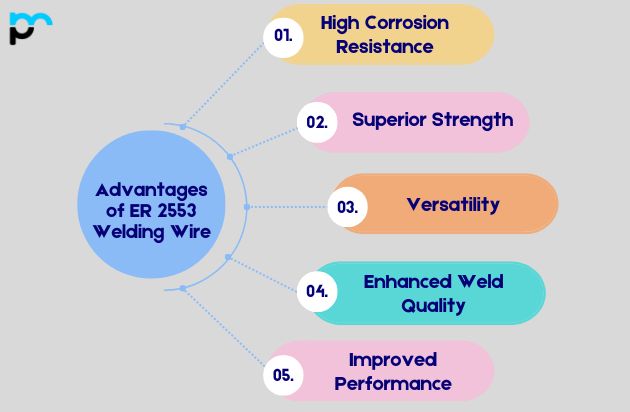
Advantages of ER 2553 Welding Wire
High Corrosion Resistance: ER 2553 welding wire delivers outstanding corrosion resistance, making it perfectly suited for demanding settings like chemical processing and marine applications.
Superior Strength: This welding wire offers high tensile and yield strength, guaranteeing long-lasting and sturdy welds for challenging industrial uses.
Versatility: Well-suited for welding duplex and super duplex stainless steels, ER 2553 is adaptable and applicable across many sectors, including oil and gas and petrochemical.
Enhanced Weld Quality: ER 2553 delivers smooth, uniform welds with few defects, supporting dependable, high-quality joint integrity.
Improved Performance: The wire’s makeup boosts its performance, delivering excellent toughness and resistance to stress corrosion cracking, which is vital for critical welding projects.
Types of ER 2553 Welding Wire
ER 2553 Welding Wire
ER 2553 Inert Gas Welding Wire
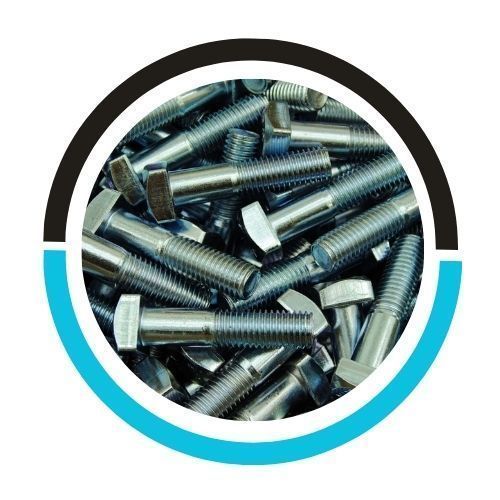
Galvanized Hex Lag Bolts
ER 2553 Inert Gas Welding Wire
High Temperature ER 2553 Welding Wire
AWS Class ER 2553 Consumable Welding Wire
AWS Class ER 2553 Consumable Welding Wire, UNS S32520 IABCO MIG Filler Wire Exporter in Rio de Janeiro, Brazil.
Application Industry
ER 2553 Welding Wire uses are as varied as the sectors they support, led mainly by the aerospace, railway, construction and automotive fields along with petrochemical, nuclear, medical, Oil & Gas, Chemical, Pharmaceutical, Food & Beverage, Nuclear, Thermal Power plants, Paper and Pulp, marine and mining, etc.
Automotive Industry
Construction Sector
Aerospace Applications
Oil and Gas Industry
Are ER 2553 Welding Wire Susceptible to Galvanic Corrosion?
ER 2553 welding wire, made for duplex and super duplex stainless steels, typically withstands galvanic corrosion thanks to its strong corrosion resistance characteristics. Nevertheless, as with all metals, it may be vulnerable when placed in direct contact with a markedly different metal while an electrolyte is present. Choosing the right materials and applying isolation methods are crucial to avoid galvanic corrosion in mixed-metal applications.