Tri-Clamp Adapters Manufacturer and Supplier in Sao Paulo, Brazil
Tri-Clamp Adapters Manufacturer in Rio de Janeiro, Tri-Clamp Adapters in Brazil, Tri-Clamp Adapters Suppliers in Sao Paulo, Tri-Clamp Adapters Exporter in Rio de Janeiro, Tri-Clamp Adapters Supplier in Belo Horizonte
Table of Contents
Tri-Clamp adapters are components used to connect Tri-Clamp fittings to various types of fittings or piping systems. They typically feature a Tri-Clamp ferrule on one end, providing a sanitary, secure connection, and a different fitting on the other end, such as threaded, barbed, or flanged connections. These adapters are vital in industries that require hygienic and leak-proof connections, such as food and beverage processing, pharmaceuticals, and biotechnology. They enable easy installation, disassembly, and maintenance of sanitary piping systems.
Specification of Tri-Clamp Adapters
Thickness
16 SWG, 18SWG, 20 SWG, 12 SWG, 14SWG1.0 mm to 5 mm
SS 201, SS 202, SS 304L, SS 316, SS 304,SS 321,SS 316L, SS 310S, SS 904L
Tri-Clamp Adapters Suppliers in Rio de Janeiro, Tri-Clamp Brewery Hose Adapter Manufacturer in Rio de Janeiro, Tri-Clamp Long Ferrule Exporter in Santa Catarina, Tri-Clamp Adapters Supplier in Sao Paulo, Brazil
Top Tri-Clamp Adapters Manufacturing Company in Sao Paulo
At Santossteel, we take pride in being the largest supplier and manufacturer in the Brazil, providing advanced solutions for all of your piping needs. With state-of-the-art manufacturing facilities strategically located in the Brazil, we keep an extensive inventory of over 25,000 tons of high-quality materials ready in stock.
Contact us for a quick quote customized to what you need.
We provide these Tri-Clamp Adapters conforming to DIN, ISO, JIS or ANSI Standard.
Tri-Clamp Thermometer Cap Exporter in Rio de Janeiro, Tri-Clamp x Male NPT Manufacturer in Santa Catarina, Tri-Clamp Adapters Price List in Sao Paulo, Brazil
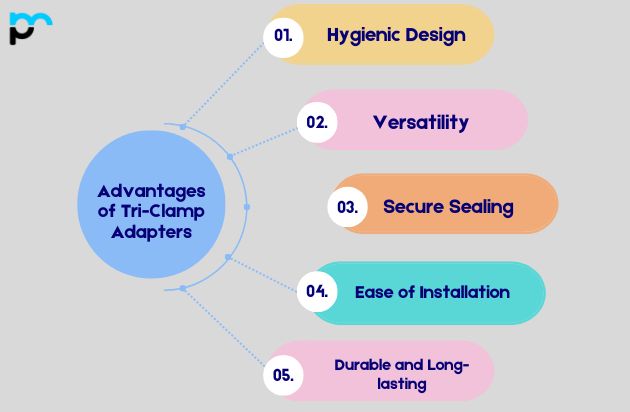
Advantages of Tri-Clamp Adapters
Hygienic Design: Tri-Clamp adapters are valued for their sanitary design, which allows easy cleaning and sterilization. This is of great importance in industries like food and beverage, pharmaceuticals, and biotechnology, where hygiene is critical. Their smooth surface and absence of crevices reduce the likelihood of bacterial accumulation, protecting product purity.
Versatility: These adapters are compatible with a wide range of fittings and equipment, making them versatile across numerous piping configurations. They can connect different types of pipes and fittings reliably, allowing quick assembly and disassembly whenever maintenance or system reconfiguration is required.
Secure Sealing: Tri-Clamp adapters provide a reliable and leak-proof connection through their tri-clover clamp system. This ensures a tight seal, preventing leaks that could compromise product integrity or safety in sensitive environments.
Ease of Installation: They are designed for easy installation without the need for specialized tools, reducing downtime during equipment setup or repairs. This convenience also decreases labour costs and enhances operational efficiency.
Durable and Long-lasting: Constructed from robust materials like stainless steel, Tri-Clamp adapters are durable and resistant to corrosion, ensuring long-lasting performance under demanding industrial conditions. Their durability makes them cost-effective over the long run, reducing the need for frequent replacements.
Types of Tri-Clamp Adapters
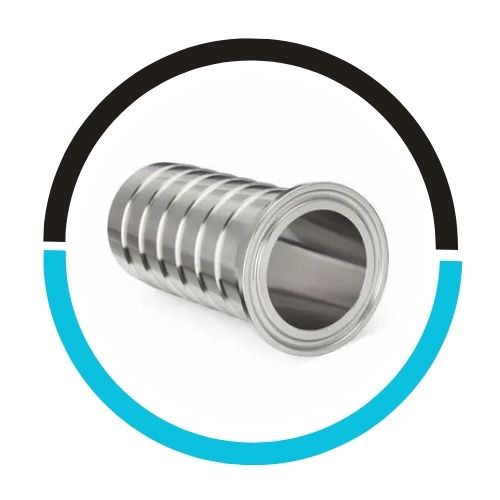
Tri-Clamp Brewery Hose Adapter
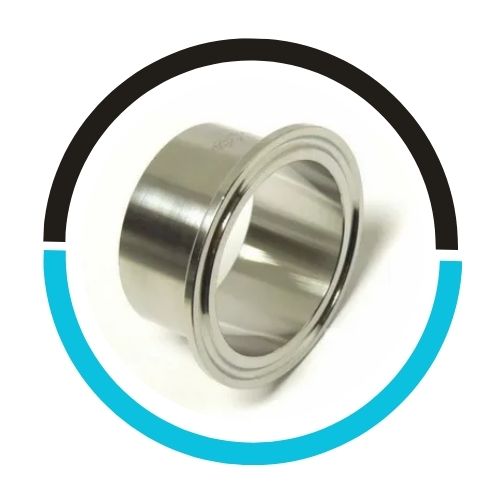
Tri-Clamp Long Ferrule
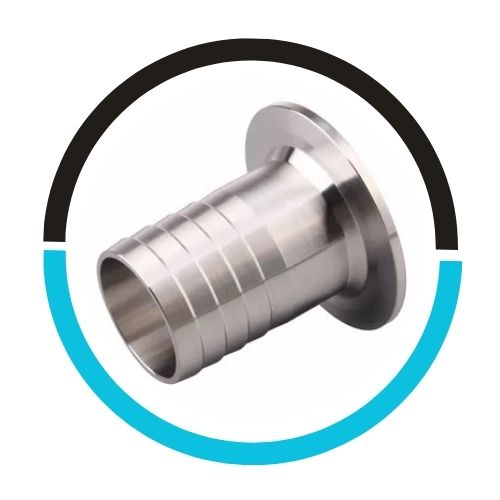
Tri-Clamp Hose Adapter
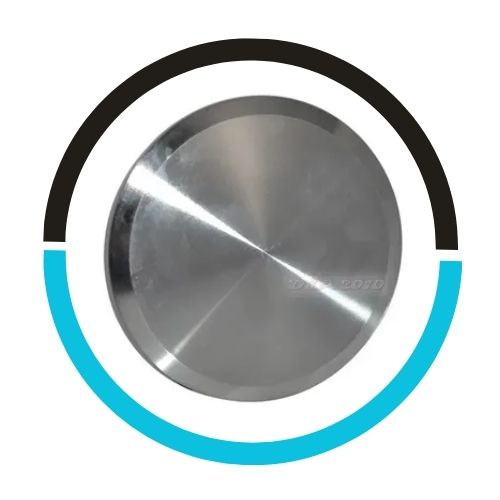
Tri-Clamp Thermometer Cap
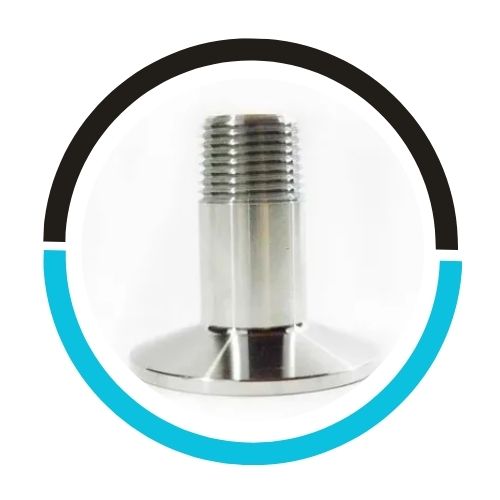
Tri-Clamp x Male NPT
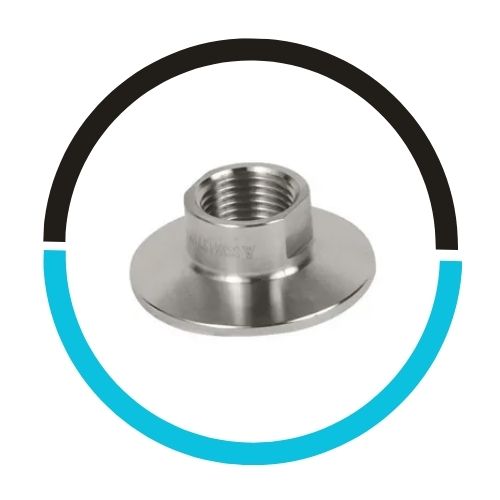
Female NPT x Tri-Clamp Adapter
Application Industry
Tri-Clamp Adapters have uses as varied as the sectors they support, led chiefly by the aerospace, railway, construction and automotive sectors along with petrochemical, nuclear, medical, Oil & Gas, Chemical, Pharmaceutical, Food & Beverage, Nuclear, Thermal Power plants, Paper and Pulp, marine and mining, etc.
Oil & Gas Industry
Aviation Industry
Petro Chemical Industry
Power Generation Industry
Are Tri-Clamp Adapters Susceptible To Galvanic Corrosion?
Tri-Clamp adapters, which are typically made from stainless steel or other corrosion-resistant materials, are inclined to withstand galvanic corrosion because of their consistent composition. Even so, when paired with dissimilar metals inside the piping system, especially in environments holding electrolytes like water, galvanic corrosion can arise over time. Choosing adapters built from compatible materials together with sufficient insulation or dielectric unions can meaningfully lessen this risk.
Tri-Clamp Adapters Supplier and Manufacturer in Rio de Janeiro, Tri-Clamp Hose Adapter in Belo Horizonte, Tri-Clamp Adapters Brazil